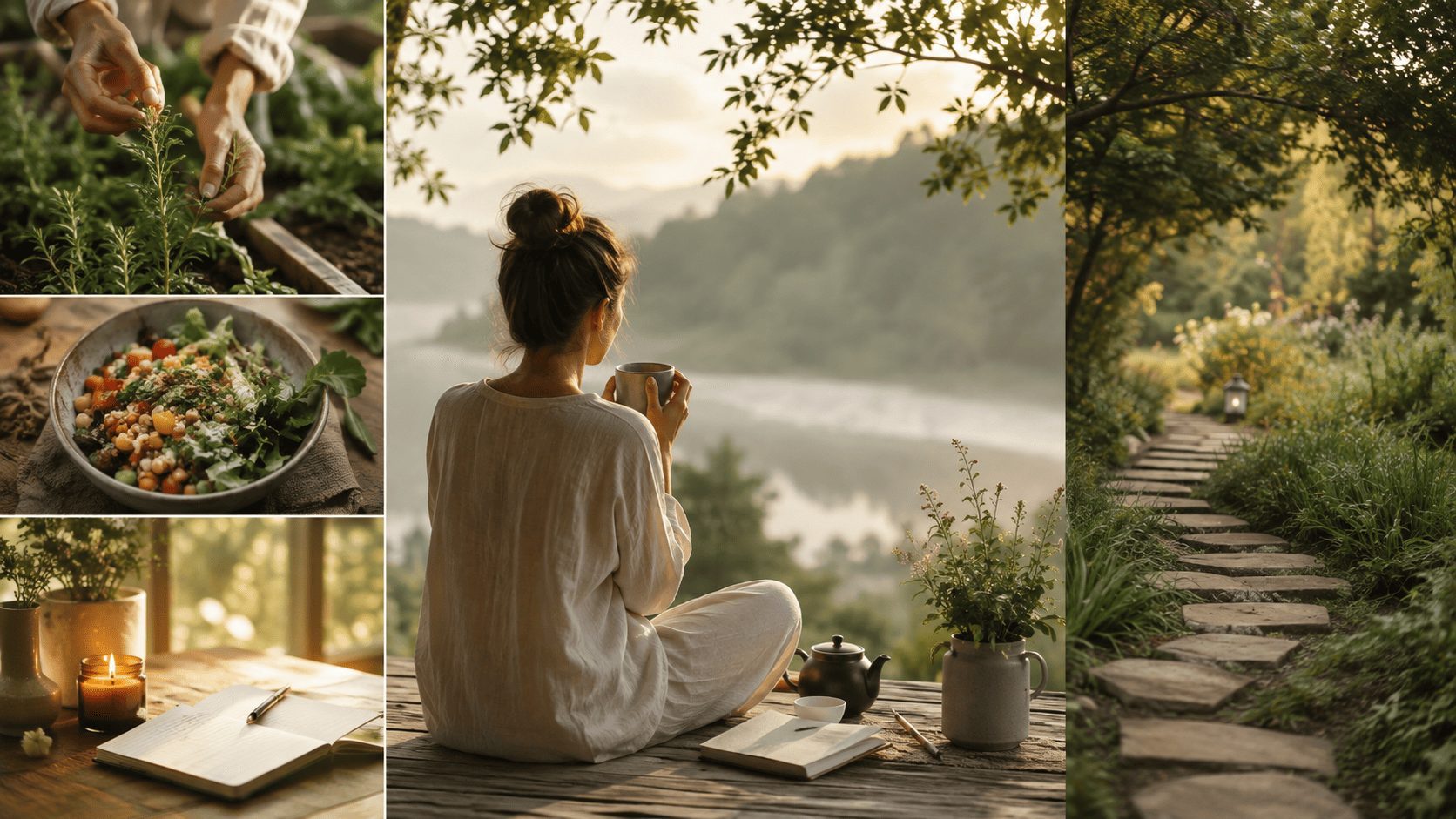
Slow living is more than simply doing everything at a slower pace. It is a lifestyle built around intention, mindfulness, balance, and quality over quantity.
In 2026, slow living is becoming increasingly relevant as people look for ways to step back from constant notifications, digital distractions, overconsumption, and the pressure to always be productive. The goal isn't to abandon technology or ambition. Instead, it is to decide what deserves your attention and create more space for it.
Harvard Health describes slow living as doing things with greater focus and purpose rather than simply doing less. It emphasizes enjoying the moment and putting more energy into fewer, more meaningful activities.
This makes slow living especially useful in today's fast-paced world.
Table of Contents
- Why Is Slow Living Trending in 2026?
- The Core Principles of Slow Living
- Slow Living and Digital Minimalism
- Slow Living at Home
- Slow Living and Food
- Slow Living and Sustainability
- How to Start Slow Living in 2026
- Slow Living Does Not Mean Being Lazy
- The 2026 Version of Slow Living
- Benefits of Slow Living
- A Simple Slow Living Routine for 2026
- Frequently Asked Questions About Slow Living
Why Is Slow Living Trending in 2026?
The idea of slowing down is not new, but its relevance has grown as everyday life has become increasingly connected and accelerated.
In 2026, several lifestyle trends are reinforcing the slow-living mindset. People are showing renewed interest in analogue activities, intentional home spaces, slower rituals, and periods away from digital entertainment. Recent home-wellness coverage, for example, highlights “spaces for stillness,” analogue activities, and rituals that deliberately take time as notable 2026 trends.
There is also growing interest in deliberately stepping away from constant stimulation. Online discussions around “doing nothing” and intentional boredom reflect a desire to reclaim attention from screens and endless scrolling.
In India, slow living is also being discussed as a response to burnout and the pressure of hustle culture, with people rethinking what success and a satisfying lifestyle should look like.
The Core Principles of Slow Living
Slow living can look different for everyone, but several principles appear again and again.
1. Choose Quality Over Quantity
Slow living encourages you to ask whether something genuinely adds value to your life.
Instead of filling your calendar with activities, you might choose a smaller number of meaningful commitments. Instead of buying something because it is trending, you might choose something durable that you genuinely need.
The idea is simple: less noise, more value.
2. Be Present
Mindful attention is at the heart of slow living.
Rather than eating while scrolling, you can focus on your meal. Instead of checking your phone during a conversation, you can give another person your full attention. Instead of rushing through a walk, you can notice your surroundings.
Research on mindfulness has linked present-moment awareness with well-being, intrinsic values, and behaviors associated with sustainability.
3. Create Intentional Routines
A slow lifestyle does not require an empty schedule.
You can still work, study, exercise, travel, and pursue ambitious goals. The difference is that your routines become more intentional.
A morning routine might include making tea or coffee without immediately opening social media. An evening routine might involve reading a physical book instead of spending another hour scrolling.
Small rituals can make ordinary moments feel more meaningful.
4. Spend Less Time on Autopilot
One of the biggest enemies of slow living is automatic behavior.
How often do you unlock your phone without knowing why? How often do you buy something because an advertisement or influencer suggested it? How often do you say yes to plans simply because you don't want to disappoint someone?
Slow living encourages a pause before action.
Ask yourself:
Do I actually want this?
Does this matter to me?
Is this helping the life I want to create?
That small pause can change everyday decisions.
Slow Living and Digital Minimalism
Technology is not the opposite of slow living.
The problem is usually not technology itself but unintentional technology use.
Your smartphone can help you communicate, work, learn, navigate, and create. But endless notifications and algorithm-driven feeds can also fragment your attention.
A slow-living approach to technology might include:
- Turning off unnecessary notifications
- Creating phone-free meals
- Keeping your phone away from your bed
- Having screen-free mornings or evenings
- Unfollowing accounts that create unnecessary comparison
- Taking regular social-media breaks
- Replacing some digital entertainment with books, music, hobbies, or outdoor activities
The goal is not to become anti-technology. It is to make technology serve your life rather than control your attention.
Slow Living at Home
Your home can make slow living easier.
Instead of designing your space only around appearance or convenience, consider how you want the space to make you feel.
Create a small reading corner. Keep a comfortable chair near a window. Add plants or natural materials. Keep frequently used objects organized. Leave some areas free from screens.
You can also introduce slower rituals into everyday life.
For example, instead of always choosing the fastest possible option, you might occasionally cook from scratch, make coffee manually, tend to plants, write in a journal, or listen to an entire album without multitasking.
These activities are valuable partly because they require your attention.
Slow Living and Food
Food is one of the easiest ways to practice slow living.
Instead of treating meals as something to finish quickly, turn them into an experience.
Try cooking seasonal food, eating without screens, preparing meals with family, or simply taking time to notice flavors and textures.
Slow food also connects personal well-being with local communities and more conscious consumption. This reflects the wider relationship between mindful choices and sustainability.
You don't need to prepare elaborate meals every day. Even making one meal slowly and intentionally can become a useful daily ritual.
Slow Living and Sustainability
Slow living and sustainable living often overlap.
When you slow down, you may become more conscious of what you buy, use, throw away, and consume.
Instead of constantly replacing possessions, you might repair them. Instead of buying something immediately, you might wait and decide whether you really need it.
Some simple practices include:
- Buying fewer but better-quality products
- Repairing items instead of replacing them
- Choosing reusable products
- Supporting local businesses when practical
- Reducing unnecessary food waste
- Buying secondhand when appropriate
- Choosing experiences over unnecessary possessions
Slow living does not automatically make someone sustainable, but intentional consumption can encourage more thoughtful choices.
How to Start Slow Living in 2026
You don't need to completely change your lifestyle overnight.
Start with one area.
Try a Slow Morning
For the first 30 minutes after waking, avoid social media.
Drink water, open a window, stretch, walk, journal, or simply sit quietly.
Practice One Slow Meal
Eat one meal each day without your phone or television.
Focus on the food and the people around you.
Schedule Empty Time
Don't fill every available minute.
Leave some space in your calendar for walking, thinking, reading, resting, or doing absolutely nothing.
Take a Slow Walk
Walk without constantly checking your phone. Notice the weather, sounds, trees, buildings, and people around you.
Create a Digital-Free Evening
Choose one evening each week when you reduce unnecessary screen use.
Read, cook, talk with family, play a board game, listen to music, or pursue a hobby.
Buy More Intentionally
Before making a non-essential purchase, wait 24 hours.
You may discover that you didn't actually need it.
Slow Living Does Not Mean Being Lazy
One of the biggest misconceptions about slow living is that it means doing nothing or avoiding ambition.
It doesn't.
You can be ambitious and still live slowly.
A person can build a business, have career goals, exercise regularly, travel, raise a family, and still practice slow living.
The difference is how intentionally they use their time.
Slow living asks you to stop treating busyness as proof of success.
Being busy is not automatically meaningful. Being productive is not automatically fulfilling.
Sometimes the most valuable thing you can do is give your full attention to one important task instead of dividing your attention between ten things.
The 2026 Version of Slow Living
Slow living in 2026 is not about returning to a completely technology-free past.
Instead, it is about finding a healthier relationship with modern life.
The emerging version of slow living combines technology with boundaries, convenience with intention, and productivity with rest.
It might mean using an app to organize your schedule but refusing to check work messages during dinner.
It might mean ordering something online when that genuinely makes life easier while choosing to cook a meal slowly on the weekend.
It might mean working efficiently so that you can have more uninterrupted time with people you care about.
In other words, slow living is not necessarily about having less technology, less work, or less ambition. It is about having more control over your attention.
Benefits of Slow Living
A slower, more intentional lifestyle may help you:
- Reduce the feeling of constant busyness
- Become more aware of everyday experiences
- Improve your ability to focus on one activity
- Create stronger social connections
- Make more thoughtful purchasing decisions
- Develop healthier digital habits
- Appreciate simple activities
- Create more room for rest and reflection
Harvard Health notes that slow living may indirectly support lower stress and greater attentiveness, while also encouraging more engaged social interactions.
Slow living should not be viewed as a medical treatment, however. Its value is primarily as a lifestyle philosophy that can help people become more intentional about how they spend their time and attention.
A Simple Slow Living Routine for 2026
If you want an easy starting point, try this:
Morning:
Wake up without immediately checking social media. Drink water, stretch, and spend a few quiet minutes without a screen.
Work or study:
Choose your most important task and focus on it without unnecessary notifications.
Lunch:
Step away from your screen and eat mindfully.
Afternoon:
Take a short walk or spend a few minutes outside.
Evening:
Reduce unnecessary screen time. Cook, read, talk to someone, exercise, or work on a hobby.
Night:
Write down one thing you appreciated about the day and prepare for tomorrow without rushing.
You don't have to follow this routine perfectly. The point is to create moments of intentionality.
Frequently Asked Questions About Slow Living
What does slow living mean in 2026?
Slow living in 2026 means intentionally choosing a calmer and more meaningful way to use your time, attention, energy, and possessions. It does not require abandoning technology, work, or ambition.
Is slow living the same as simple living?
They overlap but are not exactly the same. Simple living generally focuses on reducing unnecessary possessions, commitments, or complexity. Slow living focuses more strongly on pace, presence, attention, and intentionality.
How can I practice slow living while working full-time?
Start with small changes. Try phone-free meals, focused work sessions, slower mornings, regular walks, boundaries around work messages, and protected personal time.
Does slow living mean quitting social media?
No. You can use social media while practicing slow living. The key is intentional use rather than automatic scrolling.
Is slow living expensive?
It doesn't have to be. Many slow-living activities are free or inexpensive, such as walking, reading, cooking at home, journaling, spending time with friends, gardening, or enjoying nature.
Slow living 2026 is ultimately about reclaiming your attention.
Modern life gives us incredible convenience, but convenience can sometimes make us rush through experiences that deserve our attention.
You don't have to escape modern life to slow down.
Start small. Put your phone away during one meal. Take a walk without headphones. Make your morning coffee without scrolling. Spend an evening doing one thing instead of five things at once.
The objective isn't to make every moment slow.
It is to make more of your moments intentional, meaningful, and truly yours.
References