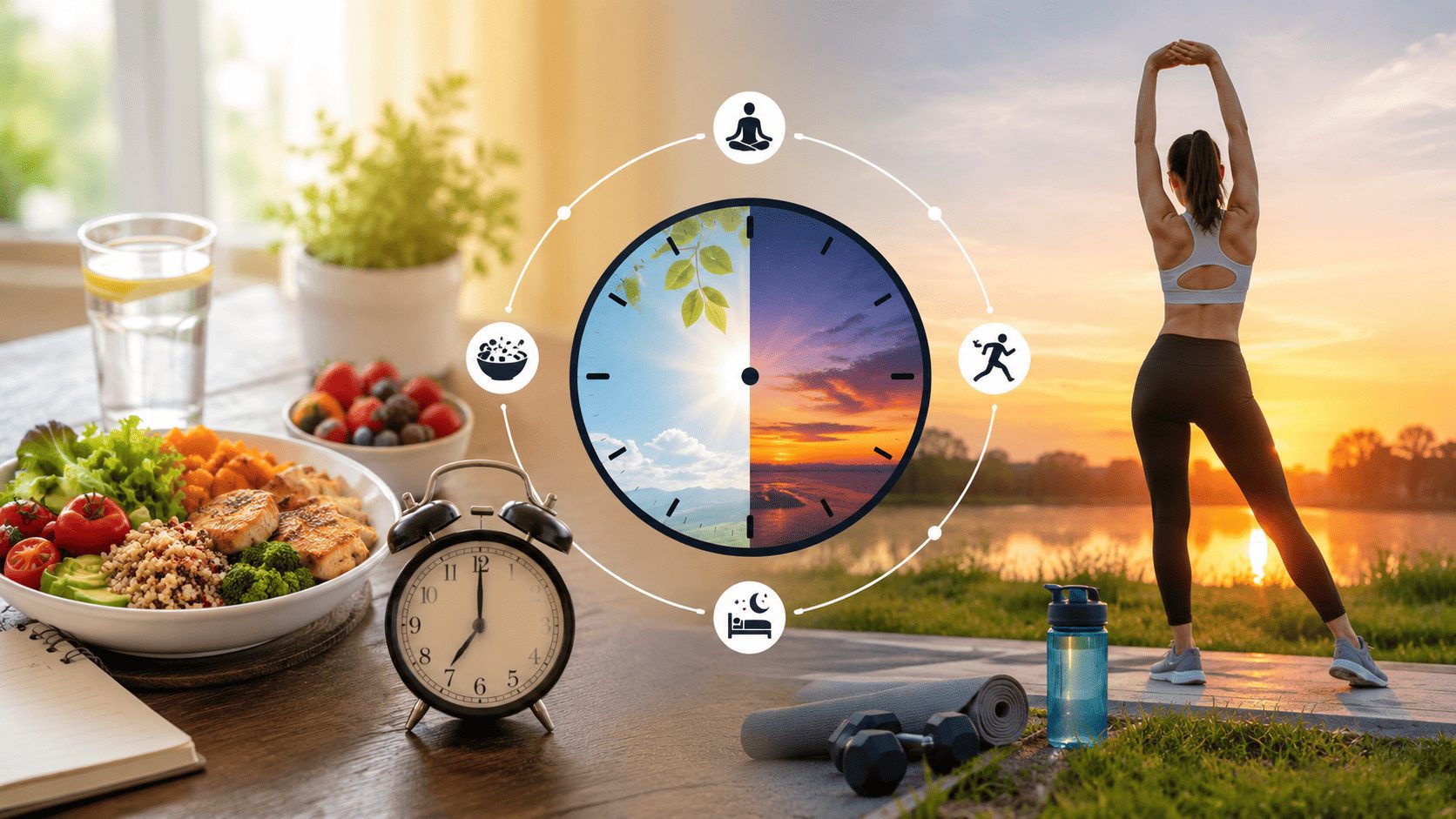
In today’s fast-paced world, many people focus on what they eat and how they exercise, but often ignore when they do these activities. Research shows that our bodies follow a natural internal clock known as the circadian rhythm, which affects digestion, metabolism, energy levels, hormone production, and physical performance.
Eating and exercising at biologically optimal times can improve weight management, energy, sleep quality, muscle growth, and overall wellness. Aligning your habits with your body clock helps your body function more efficiently and naturally.
This guide explains the best times to eat and exercise based on biological rhythms and how you can build healthier daily routines.
Table of Contents
- What Is Circadian Rhythm?
- Why Timing Matters for Health
- Best Time to Eat Meals
- Ideal Breakfast Time
- Best Time for Lunch
- Best Time for Dinner
- Effects of Late-Night Eating
- Best Time to Exercise
- Benefits of Morning Workouts
- Benefits of Evening Workouts
- Combining Meal Timing and Exercise
- Tips for Creating a Healthy Routine
What Is Circadian Rhythm?
Circadian rhythm is the body’s natural 24-hour internal clock that regulates sleep, hormones, digestion, body temperature, and energy levels. This biological rhythm is influenced mainly by sunlight and daily habits.
Your body performs certain functions better at specific times of the day. For example:
- Digestion works more efficiently during daylight hours
- Energy levels are usually higher during the morning and afternoon
- Muscle performance often peaks in the late afternoon
- The body naturally prepares for rest at night
When eating and exercise schedules match this rhythm, overall health can improve significantly.
Why Timing Matters for Health
Meal timing and exercise timing affect:
- Metabolism
- Blood sugar control
- Fat storage
- Hormone balance
- Sleep quality
- Muscle recovery
- Energy production
Poor timing habits like skipping breakfast, eating heavy meals late at night, or exercising too close to bedtime may negatively affect health and increase the risk of weight gain and poor sleep.
Best Time to Eat Meals
Experts suggest eating most calories earlier in the day when metabolism is more active. A balanced eating schedule supports digestion and energy balance.
General meal timing recommendations:
- Breakfast: Within 1–2 hours of waking
- Lunch: Midday when digestion is strongest
- Dinner: At least 2–3 hours before sleep
Maintaining consistent meal times daily helps regulate hunger hormones and improves metabolic health.
Ideal Breakfast Time
Breakfast is important because it replenishes energy after overnight fasting.
Benefits of Eating Breakfast Early
- Boosts metabolism
- Improves concentration
- Supports stable blood sugar levels
- Reduces unhealthy snacking later
Healthy breakfast options include:
People who eat balanced breakfasts often experience better energy throughout the day.
Best Time for Lunch
Lunch is best consumed between 12 PM and 2 PM when the digestive system remains active.
A nutritious lunch should include:
- Lean protein
- Whole grains
- Vegetables
- Healthy fats
Skipping lunch can cause energy crashes and overeating later in the evening.
Best Time for Dinner
Dinner should ideally be lighter and eaten earlier in the evening.
Recommended Dinner Timing
- Around 6 PM to 8 PM
- At least 2–3 hours before bedtime
Late dinners may interfere with digestion and sleep quality.
Healthy dinner ideas include:
- Grilled vegetables and protein
- Soups and salads
- Light rice or quinoa dishes
- Lentils and steamed vegetables
Effects of Late-Night Eating
Eating late at night may:
- Increase fat storage
- Disrupt sleep
- Cause acid reflux
- Affect blood sugar balance
- Reduce metabolic efficiency
Late-night snacking is often linked with processed foods and emotional eating habits.
If hunger occurs at night, lighter options like herbal tea, fruits, or nuts are better choices.
Best Time to Exercise
The best exercise time depends on personal goals, body rhythm, and lifestyle.
Morning Exercise
Morning workouts may help with:
- Fat burning
- Mental clarity
- Consistency
- Mood improvement
Afternoon or Evening Exercise
Physical performance often peaks later in the day because:
- Muscles are warmer
- Strength and flexibility improve
- Reaction time increases
Both timings can be beneficial if done consistently.
Benefits of Morning Workouts
Morning exercise can:
- Increase metabolism early
- Improve discipline
- Enhance focus during the day
- Support weight management
Good morning activities include:
- Walking
- Yoga
- Cycling
- Light strength training
Exercising outdoors in morning sunlight may also support circadian rhythm balance.
Benefits of Evening Workouts
Evening workouts may improve:
- Muscle strength
- Endurance
- Athletic performance
Popular evening exercises include:
- Gym workouts
- Running
- Sports activities
- High-intensity training
However, intense exercise very close to bedtime may affect sleep for some individuals.
Combining Meal Timing and Exercise
Proper meal and workout timing helps maximize performance and recovery.
Before Exercise
Eat a light meal or snack containing:
- Carbohydrates
- Protein
- Hydration
Examples:
- Banana with peanut butter
- Yogurt with berries
- Oatmeal
After Exercise
Post-workout nutrition helps muscle recovery.
Best post-workout foods:
- Protein smoothies
- Eggs
- Chicken with vegetables
- Greek yogurt
Eating within 30–90 minutes after exercise may support better recovery.
Tips for Creating a Healthy Routine
1. Maintain Consistent Timing
Try eating and exercising around the same times daily.
2. Prioritize Sleep
Good sleep supports hormones and recovery.
3. Avoid Heavy Late Meals
Choose lighter dinners for better digestion.
4. Stay Hydrated
Drink enough water throughout the day.
5. Listen to Your Body
Energy levels and schedules vary between individuals.
6. Get Morning Sunlight
Natural light exposure supports healthy circadian rhythms.
Eating and exercising at biologically optimal times can improve overall health, metabolism, energy, sleep, and physical performance. Aligning daily habits with the body’s natural circadian rhythm allows the body to function more efficiently.
Simple changes like eating earlier dinners, maintaining consistent meal times, and choosing suitable workout hours can create lasting health benefits. Building routines that support your biological clock is one of the most natural ways to improve wellness and long-term health.

References