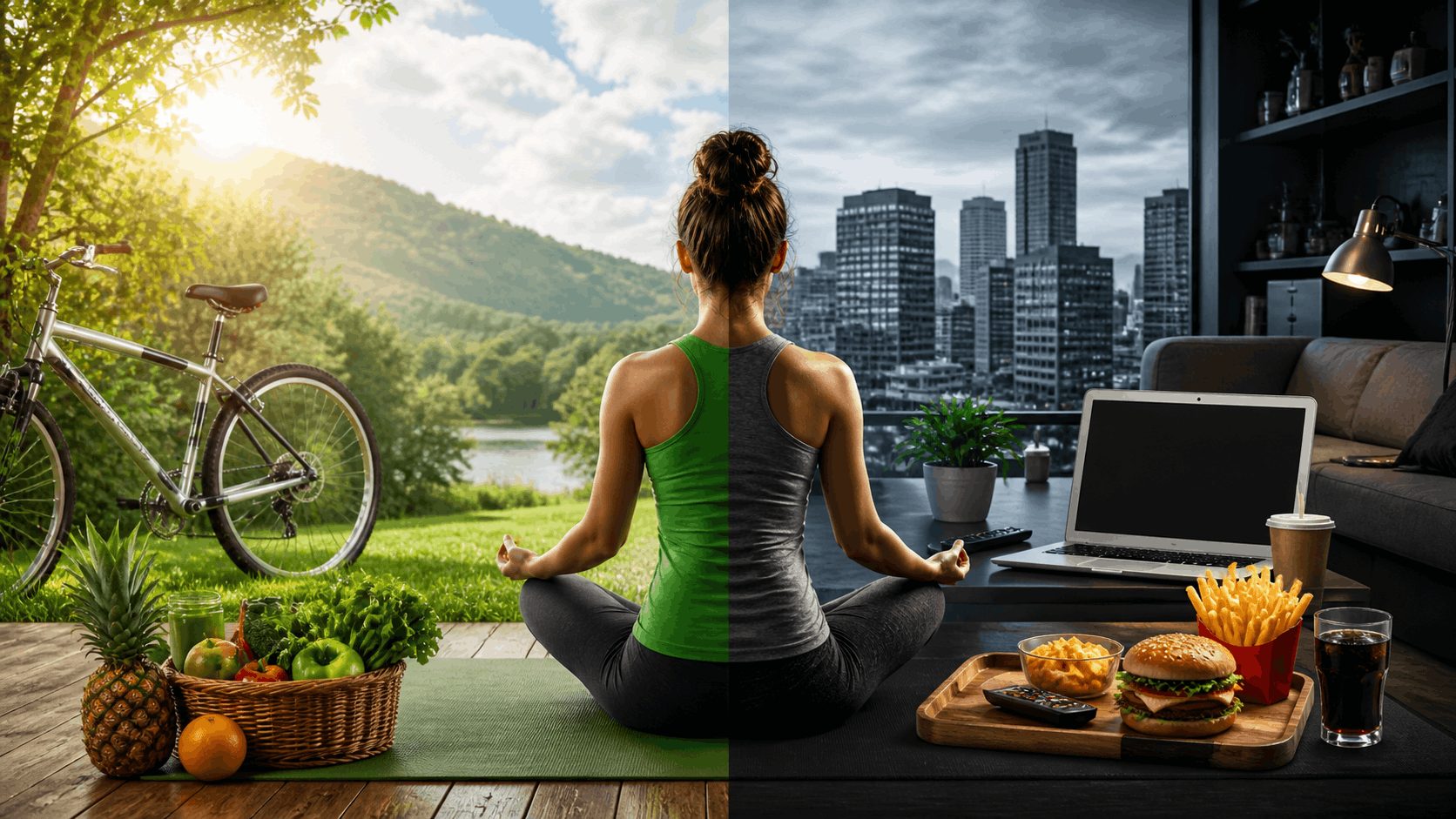
In today’s fast-paced world, most people follow an artificial lifestyle filled with processed foods, screen time, and stress. On the other hand, natural living focuses on simple habits, clean food, and a balanced routine. Understanding the difference between these two lifestyles can help you make better choices for your health and overall well-being.
Both lifestyles have their advantages, but their long-term impact on your body and mind can be very different.
Table of Contents
What Is Natural Living
Natural living is a lifestyle that focuses on living in harmony with nature. It includes eating fresh and unprocessed foods, staying physically active, and maintaining a balanced daily routine.
Key features of natural living:
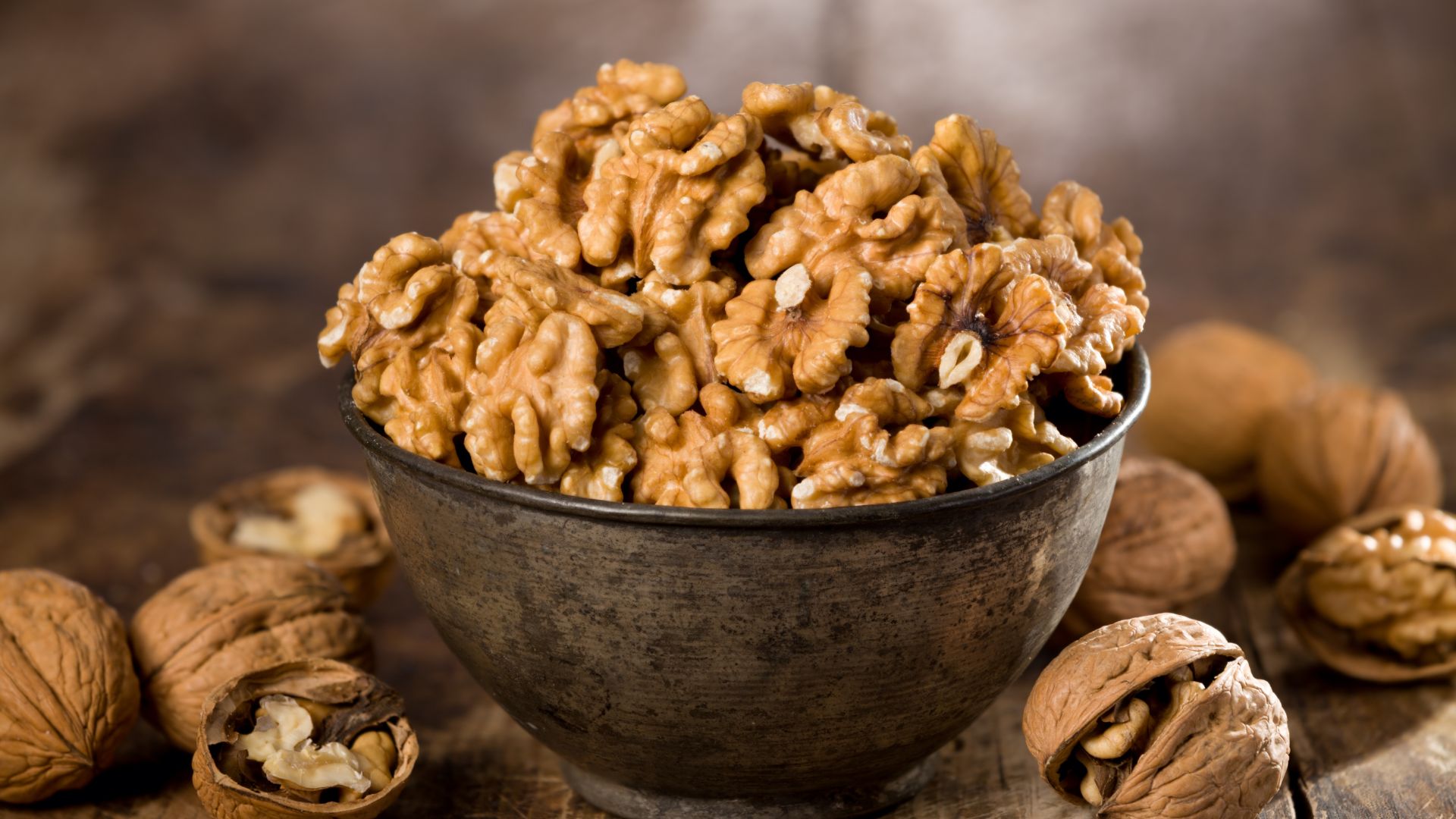
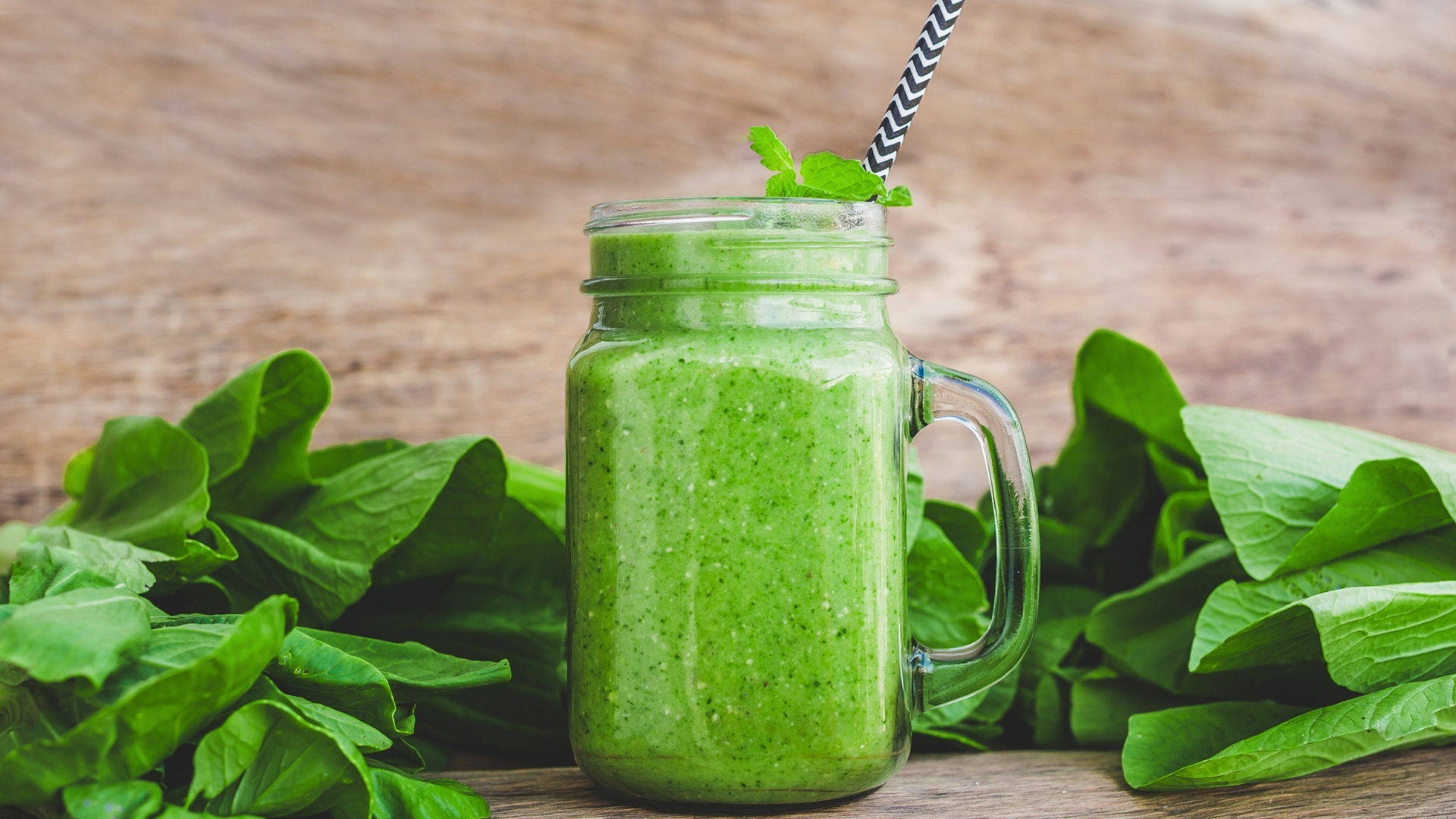
- Consumption of fresh and whole foods
- Regular physical activity
- Proper sleep and relaxation
- Minimal use of chemicals and artificial products
This lifestyle supports long-term health and inner balance.
What Is an Artificial Lifestyle
An artificial lifestyle is based on convenience and modern habits that often disconnect us from natural ways of living. It includes processed foods, lack of movement, and heavy reliance on technology.
Common characteristics:
- High consumption of packaged and processed foods
- Sedentary routine with less physical activity
- Irregular sleep patterns
- Increased stress and screen time
While it may offer comfort, it can negatively affect health over time.
Impact on Physical Health
Natural living supports better physical health by providing essential nutrients and encouraging movement. It helps maintain a healthy weight, improves digestion, and boosts immunity.
In contrast, an artificial lifestyle can lead to:
- Weight gain
- Low energy levels
- Poor digestion
- Increased risk of lifestyle-related issues
Choosing natural habits can improve your overall physical condition.
Impact on Mental Well-Being
Mental health is strongly influenced by your daily lifestyle. Natural living promotes calmness, reduces stress, and improves focus.
On the other hand, an artificial lifestyle often leads to:
- Anxiety and stress
- Lack of concentration
- Mental fatigue
Spending time in nature and following simple routines can help maintain mental balance.
Role of Diet in Both Lifestyles
Diet plays a major role in defining your lifestyle. Natural living encourages fresh, home-cooked meals that are rich in nutrients.
Artificial lifestyle diets often include:
- Fast food
- Sugary drinks
- Processed snacks
These foods may be convenient but can harm your health in the long run.
Daily Habits and Routine
Natural living focuses on consistency and discipline in daily habits such as waking up early, staying active, and eating on time.
Artificial lifestyle habits often include irregular routines, late nights, and lack of physical activity, which can disturb your body’s natural rhythm.
A structured routine helps improve both productivity and health.
Long-Term Benefits of Natural Living
Adopting natural living habits can provide long-term benefits such as:
- Better immunity
- Improved energy levels
- Healthy skin and body
- Reduced stress
It helps you build a sustainable and healthy lifestyle.
Challenges of Artificial Lifestyle
An artificial lifestyle may seem easy, but it comes with several long-term challenges:
- Dependence on unhealthy habits
- Increased stress levels
- Reduced physical activity
- Poor overall health
Awareness is the first step toward making positive changes.
Tips to Shift Towards Natural Living
- Start eating fresh and home-cooked food
- Reduce screen time
- Stay physically active
- Maintain a regular sleep schedule
- Spend time outdoors
Small changes can lead to big improvements over time.
Common Mistakes to Avoid
- Trying to change everything at once
- Ignoring consistency
- Following extreme routines
- Not focusing on mental health
Gradual and balanced changes are more effective.

References