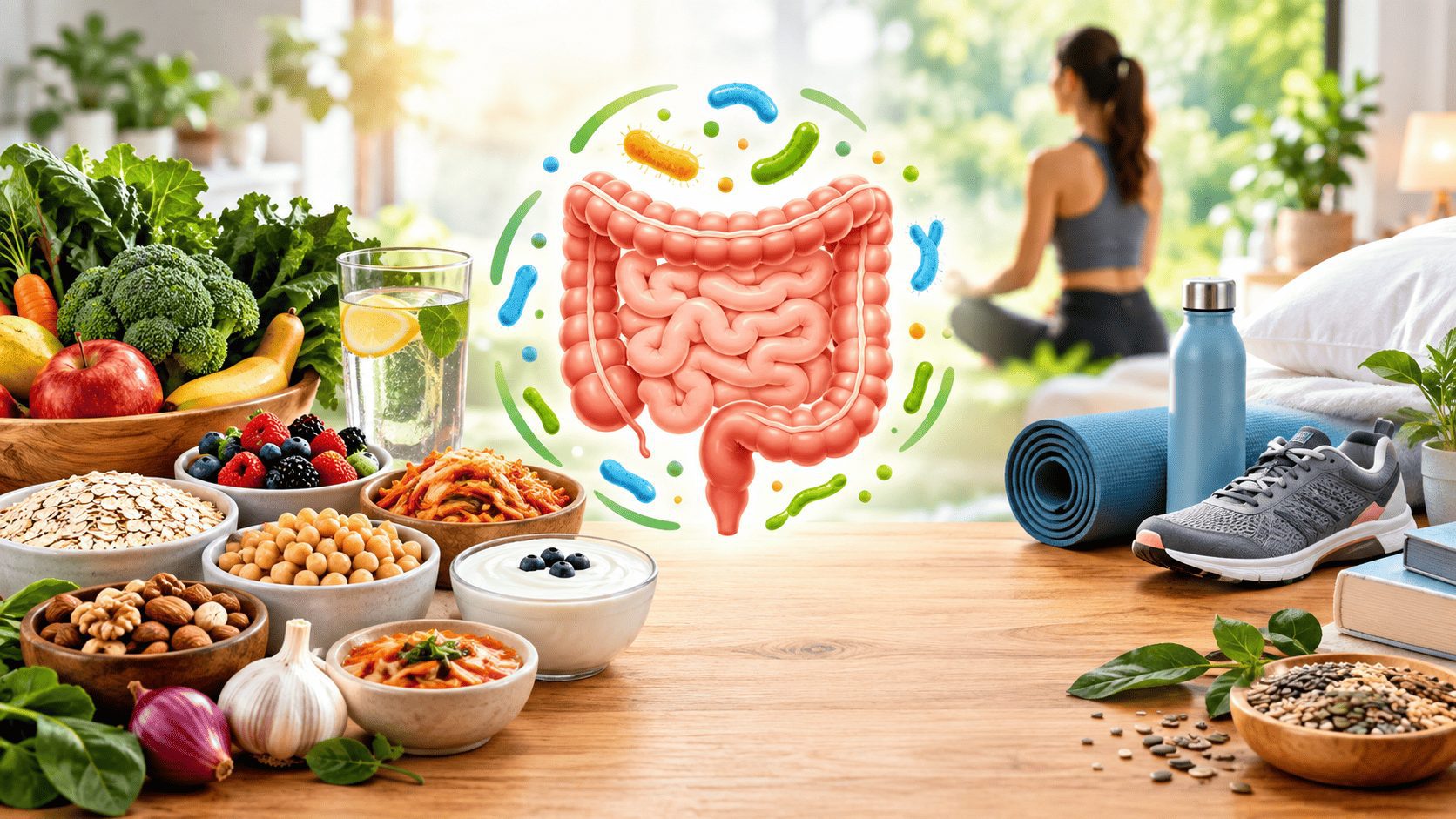
Gut health plays an important role in overall well-being. The digestive system does much more than break down food—it is home to a large community of microorganisms known as the gut microbiome. Supporting this community through everyday food and lifestyle choices can help promote healthy digestion and regular bowel movements.
Table of Contents
The good news is that improving gut health does not always require complicated diets or expensive supplements. Simple habits such as eating more fiber-rich foods, including fermented foods, staying hydrated, getting enough physical activity, and maintaining a balanced diet can support a healthier digestive system.
What Is Gut Health?
Gut health refers to how well your digestive system functions and how the microorganisms living in your digestive tract interact with your body.
The gut microbiome contains many different microorganisms. Their composition can vary from person to person, and diet is one factor that can influence the gut environment.
A healthy approach is not about eliminating every type of bacteria. Instead, the goal is to support a diverse and balanced gut environment through nutritious foods and healthy daily habits.
1. Eat More Fiber-Rich Foods
One of the simplest natural ways to support gut health is to include more dietary fiber in your meals.
Fiber is found naturally in foods such as:
- Fruits and vegetables
- Beans and lentils
- Chickpeas
- Oats and whole grains
- Nuts and seeds
- Berries and apples
Fiber can support regular bowel movements and may also provide fuel for certain microorganisms in the gut. Research suggests that different types of fiber can have different effects on the gut microbiome and other aspects of health.
If your current diet is low in fiber, increase it gradually rather than making a sudden change. A rapid increase can cause gas or bloating in some people.
2. Include Fermented Foods
Fermented foods can be another useful addition to a balanced diet.
Examples include:
- Yogurt with live cultures
- Kimchi
- Sauerkraut
- Miso
- Kombucha
- Certain fermented vegetables
However, it is important to understand that not every fermented food is technically a probiotic food. A probiotic refers to a specific live microorganism that has demonstrated a health benefit when consumed in an adequate amount.
For a simple everyday option, plain yogurt containing live cultures can be included as part of a balanced meal or snack.
3. Choose a Variety of Plant Foods
Eating a wide range of plant foods can help provide different types of fiber and other nutrients.
Instead of eating the same vegetables or fruits every day, try rotating your choices. For example, you could include leafy greens, carrots, broccoli, apples, berries, beans, oats, nuts, and seeds throughout the week.
A varied diet can provide different types of dietary fibers and plant compounds, helping create a more diverse nutritional environment for your gut.
4. Drink Enough Water
Hydration is another simple part of maintaining digestive health.
Water helps your body function normally, and adequate fluid intake is particularly important when increasing dietary fiber. Fiber works better when you consume enough fluids.
Instead of waiting until you feel very thirsty, make water a regular part of your daily routine.
5. Limit Highly Processed Foods
A healthy gut-supporting diet is not only about what you add—it can also be about what you eat less often.
Try to limit excessive amounts of highly processed foods that are high in added sugars, refined carbohydrates, salt, or unhealthy fats. Instead, build meals around whole or minimally processed foods such as vegetables, fruits, whole grains, legumes, nuts, seeds, and other nutrient-rich choices.
You do not need to completely eliminate your favorite foods. The overall pattern of your diet matters.
6. Eat Prebiotic-Rich Foods
Prebiotics are substances, often certain types of carbohydrates, that microorganisms in the digestive tract can use as fuel.
Some foods that contain prebiotic fibers include onions, garlic, asparagus, legumes, oats, and other plant foods.
Adding these foods to a varied diet can help provide fiber that supports the gut microbiome.
7. Stay Physically Active
Regular physical activity is another important part of a healthy lifestyle.
You do not necessarily need an intense workout every day. Walking, cycling, swimming, stretching, or other activities that you enjoy can help you stay active.
Combining regular movement with a balanced diet, adequate sleep, and hydration can support overall digestive and general health.
8. Get Enough Sleep
Your daily routine can also influence your overall well-being. Sleep gives your body time to rest and recover.
Try to maintain a consistent sleep schedule and create a relaxing bedtime routine. Reducing excessive screen time before bed, keeping your sleeping environment comfortable, and maintaining regular sleep hours may make it easier to get adequate rest.
9. Manage Everyday Stress
Stress can affect how your digestive system feels and functions. Some people notice changes such as bloating, stomach discomfort, or changes in bowel habits during stressful periods.
Simple stress-management activities may include:
- Walking outdoors
- Deep breathing
- Meditation
- Gentle stretching
- Listening to music
- Spending time with friends and family
- Taking short breaks during a busy day
Finding a stress-management technique that fits your lifestyle can make healthy habits easier to maintain.
10. Be Careful With Probiotic Supplements
Probiotic supplements are widely available, but taking a supplement is not automatically necessary for everyone.
Different probiotic products contain different microorganisms and strains, and research has shown that effects can vary depending on the specific strain and health condition. The NIH notes that there are currently no general recommendations covering probiotic use for all healthy people.
If you are considering a probiotic supplement, particularly if you have an underlying medical condition or a weakened immune system, speak with a healthcare professional first.
A Simple Daily Routine for Better Gut Health
You can support your digestive health without following a complicated plan.
A simple routine could look like this:
Morning: Start the day with water and a fiber-rich breakfast such as oats, fruit, or whole-grain foods.
Lunch: Include vegetables, legumes or another protein source, and whole grains.
Snack: Choose fruit, nuts, seeds, or plain yogurt with live cultures.
Dinner: Build your meal around vegetables, protein, and a fiber-rich carbohydrate.
Throughout the day: Drink water, stay physically active, and take short breaks to manage stress.
The key is consistency rather than perfection.
Foods That May Support Gut Health
Some everyday foods that can fit into a gut-friendly eating pattern include:
- Oats
- Lentils
- Chickpeas
- Beans
- Apples
- Berries
- Bananas
- Broccoli
- Carrots
- Leafy greens
- Nuts
- Seeds
- Whole grains
- Plain yogurt with live cultures
- Fermented vegetables
Everyone responds to food differently, so pay attention to how your body reacts to individual foods.
What About Bloating and Digestive Discomfort?
Adding more fiber is generally beneficial, but increasing it too quickly can cause gas and bloating. NIDDK recommends increasing fiber gradually so your body has time to adjust.
If you regularly experience severe bloating, persistent abdominal pain, ongoing diarrhea or constipation, unexplained weight loss, blood in the stool, or other concerning symptoms, speak with a healthcare professional rather than relying only on dietary changes.
Improving gut health naturally starts with simple, sustainable habits. Eating a variety of fiber-rich plant foods, drinking enough water, including appropriate fermented foods, staying active, getting sufficient sleep, and managing stress can all contribute to a healthier lifestyle.
You do not need a complicated diet or a long list of supplements. Start with one or two realistic changes, make them part of your daily routine, and gradually build healthier habits.

References