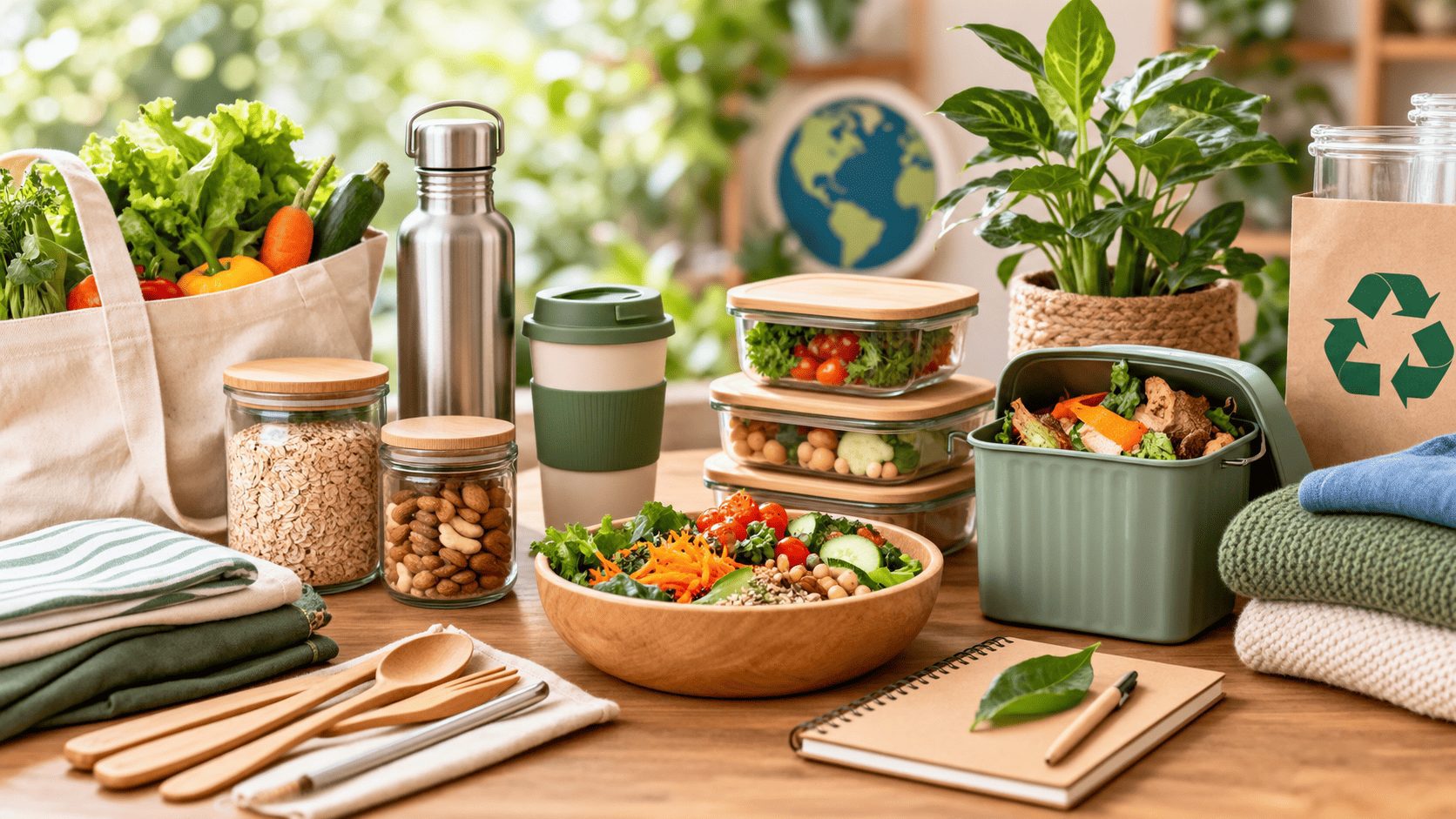
A low waste lifestyle focuses on preventing unnecessary waste, buying more thoughtfully, reusing products, repairing damaged items and recycling materials when appropriate.
It does not mean that you must produce absolutely no waste. Instead, the goal is to make practical choices that gradually reduce the amount of material going into the trash.
Table of Contents
- Why Low Waste Living Matters in 2026
- Start With the Five Rs
- Reduce Food Waste
- Cut Down on Single-Use Plastics
- Reuse, Repair and Repurpose
- Create a Low Waste Kitchen
- Choose Low Waste Shopping Habits
- Build a Low Waste Bathroom
- Make Your Wardrobe More Sustainable
- Compost Organic Waste
- Adopt Low Waste Digital and Work Habits
- Simple Low Waste Routine for 2026
UNEP describes sustainable lifestyles as ways of living that minimize environmental degradation, including waste, pollution and unnecessary use of natural resources.
In 2026, low waste living is becoming less about perfection and more about making everyday consumption more intentional.
Why Low Waste Living Matters in 2026
Waste remains a major global environmental challenge. UNEP estimates that humanity generates around 2.1 to 2.3 billion tonnes of municipal solid waste each year, while global waste generation could reach approximately 3.8 billion tonnes annually by 2050 without stronger action.
This makes waste prevention an important part of sustainable living.
The good news is that many low waste habits can also make everyday life simpler. Buying fewer unnecessary products, planning meals, repairing belongings and using reusable items can reduce both waste and unnecessary spending.
Start With the Five Rs
A practical way to begin your low waste lifestyle is to follow the Five Rs:
1. Refuse
Avoid products and packaging you do not need.
Examples include:
- Disposable cutlery
- Unnecessary shopping bags
- Excess packaging
- Promotional items you will not use
- Disposable cups and bottles
2. Reduce
Buy less and choose products that you can use for a long time.
Before buying something, ask:
Do I really need this?
3. Reuse
Give existing products another purpose before replacing them.
Glass jars, shopping bags, containers, old clothing and furniture can often be reused in different ways.
4. Repair
Repair clothing, furniture, appliances and electronics whenever practical instead of immediately replacing them.
5. Recycle
Recycle materials through the recycling system available in your area. However, recycling should not replace waste prevention. The most effective approach is to avoid creating unnecessary waste in the first place.
Reduce Food Waste
Food waste deserves special attention in 2026. The United Nations' International Day of Zero Waste 2026 focused specifically on food waste, highlighting its environmental and economic impacts.
Simple ways to reduce food waste include:
- Plan meals before grocery shopping
- Make a shopping list
- Buy only the amount you can use
- Store food correctly
- Freeze food before it spoils
- Use leftovers creatively
- Keep track of foods approaching their expiry date
- Compost suitable food scraps
A simple weekly “use what you have” meal can help clear older ingredients before buying more.
Cut Down on Single-Use Plastics
Single-use products are often convenient but can quickly create unnecessary household waste.
Start by replacing frequently used disposable products with durable alternatives.
Consider using:
- Reusable shopping bags
- Refillable water bottles
- Reusable food containers
- Cloth napkins
- Reusable coffee cups
- Refillable cleaning products
- Reusable produce bags
UNEP recommends buying mindfully, avoiding unnecessary packaging and using refill or deposit-return systems where available.
The key is not to purchase dozens of “eco-friendly” replacements at once. Use what you already own and replace disposable products gradually as they wear out.
Reuse, Repair and Repurpose
One of the simplest low waste habits is to extend the useful life of the things you already own.
Before throwing something away, consider whether it can be:
- Repaired
- Donated
- Sold
- Shared
- Repurposed
- Used for another purpose
For example, an old cotton T-shirt can become a cleaning cloth, while glass containers can be reused for food storage.
Repairing also helps reduce demand for new products and the resources required to manufacture them. UNEP promotes reuse, repair and longer product lifespans as important parts of moving away from a traditional “take-make-waste” model.
Create a Low Waste Kitchen
The kitchen is one of the easiest places to make visible changes.
Try these habits:
Plan Before You Shop
Check your refrigerator, freezer and pantry before making a grocery list.
Store Food Properly
Use airtight containers and appropriate storage methods to help food stay fresh longer.
Use Reusable Containers
Choose durable containers instead of repeatedly buying disposable food-storage products.
Compost Food Scraps
Fruit and vegetable peels, coffee grounds and other suitable organic materials can often be composted.
Use Every Ingredient
Vegetable scraps can sometimes be used for stocks, while leftover cooked vegetables can become part of soups, wraps or other meals.
EPA also recommends shopping thoughtfully, composting food scraps and using reusable household products as practical waste-reduction strategies.
Choose Low Waste Shopping Habits
Low waste living starts before a product enters your home.
Before purchasing something, consider:
Need → Quality → Packaging → Longevity → End of life
Choose products that are durable, repairable, reusable or refillable when practical.
Other useful habits include:
- Carry your own shopping bag
- Buy larger quantities when it genuinely reduces packaging and will be used
- Choose minimally packaged products
- Shop local when practical
- Buy secondhand when appropriate
- Borrow rarely used items
- Avoid impulse purchases
A useful rule for 2026 is to buy for longevity rather than convenience alone.
Build a Low Waste Bathroom
Bathrooms can contain many disposable and heavily packaged products.
You can gradually reduce waste by choosing:
- Refillable personal-care products
- Reusable towels
- Long-lasting grooming tools
- Products with minimal packaging
- Refillable soap containers
- Durable storage containers
Do not throw away perfectly usable products simply because you want to switch to a more sustainable alternative. Use what you already have first.
Make Your Wardrobe More Sustainable
Fast-changing fashion trends can encourage unnecessary clothing purchases.
A low waste wardrobe focuses on wearing clothes longer and getting more use from what you already own.
Try:
- Rewearing outfits
- Repairing small tears
- Buying secondhand
- Choosing versatile clothing
- Donating good-condition clothing
- Organizing clothing swaps
- Avoiding unnecessary trend-driven purchases
Instead of asking, “What should I buy next?”, ask:
“How can I get more use from what I already own?”
This small mindset shift can make your wardrobe simpler and reduce unnecessary consumption.
Compost Organic Waste
Composting can help keep food scraps and garden waste out of landfill systems.
Depending on your space, you might use:
- Backyard composting
- Small-bin composting
- Community composting
- Local organic-waste collection
EPA recommends composting suitable food scraps and yard waste as one way to reduce the amount of organic material sent to landfills.
If you live in an apartment, look for local compost collection or community options rather than assuming you need a large garden.
Adopt Low Waste Digital and Work Habits
Low waste living is not limited to physical products.
At work or home, you can also reduce unnecessary resource use by:
- Avoiding unnecessary printing
- Using digital documents
- Reusing notebooks and office supplies
- Sharing rarely used equipment
- Repairing electronics when practical
- Keeping devices longer instead of upgrading frequently
- Donating functional electronics you no longer need
UNEP recommends extending product life and avoiding unnecessary upgrades as part of a broader lifecycle approach to waste reduction.
Simple Low Waste Routine for 2026
You do not need to change your entire lifestyle overnight.
Try this simple routine:
Every Day
- Carry a reusable bottle
- Avoid unnecessary disposable items
- Use leftovers
- Separate waste correctly
- Think before buying
Every Week
- Plan meals
- Check the refrigerator before grocery shopping
- Clean and reuse containers
- Repair one small item if needed
- Donate or reuse something you no longer need
Every Month
- Review your household waste
- Identify your biggest waste category
- Reduce one unnecessary purchase
- Organize a clothing or household-item swap
- Check whether unused items can be repaired, donated or repurposed
This approach makes low waste living manageable instead of overwhelming.
A low waste lifestyle in 2026 does not require perfection, expensive products or a completely waste-free home.
The biggest changes often come from simple habits: buy less, refuse unnecessary items, reuse what you own, repair instead of replacing, reduce food waste and recycle correctly.
UNEP emphasizes that sustainable lifestyles depend not only on individual choices but also on systems, infrastructure and access to sustainable products and services.
Start with one area of your life, build a habit and then move to the next. Over time, these small decisions can create a simpler home, more intentional consumption habits and a lower-waste lifestyle.

References