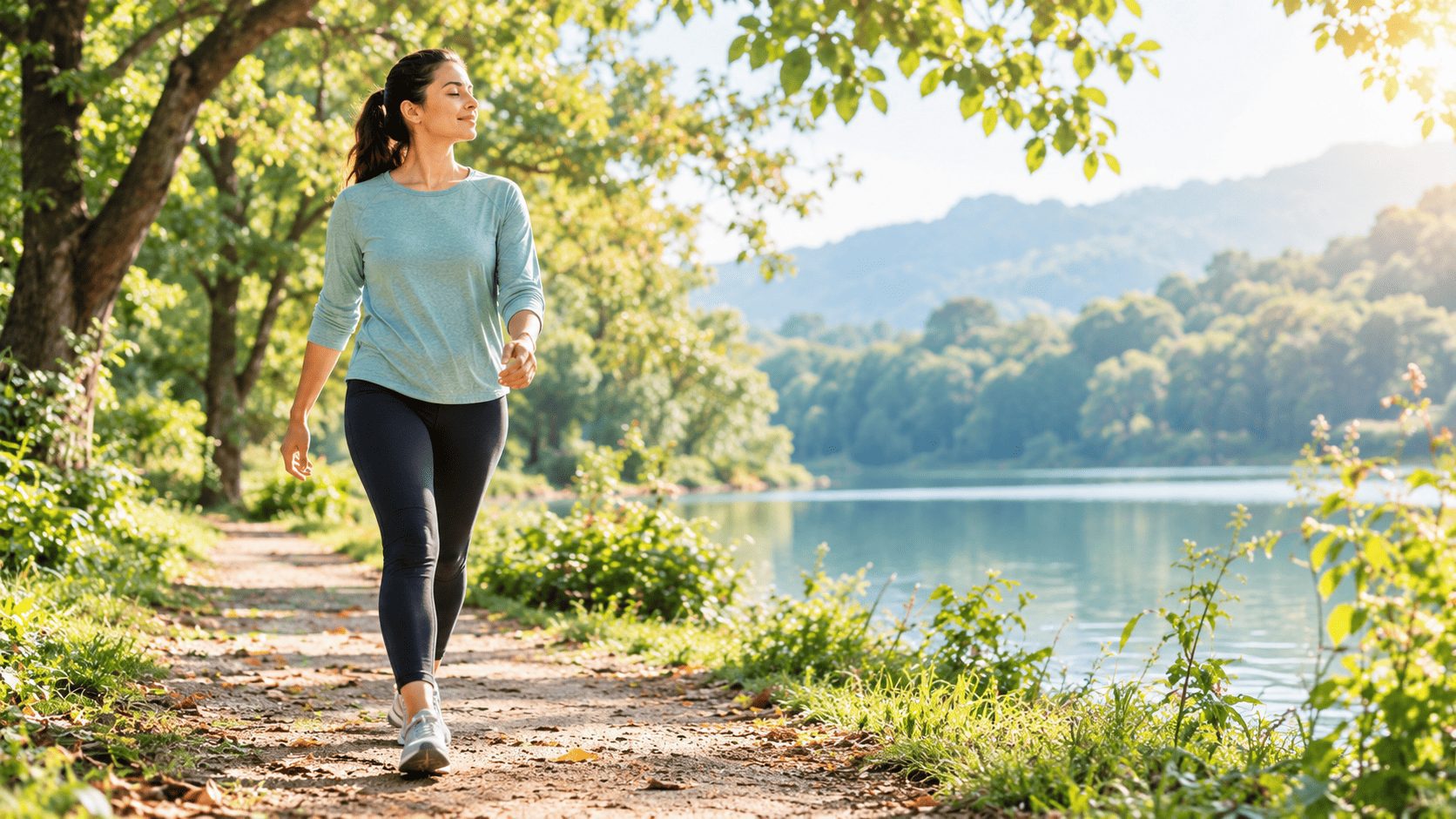
Finding time for exercise and relaxation can be difficult when your daily routine is already full. Walking yoga offers a simple way to combine gentle movement, mindful breathing, and awareness of your surroundings without needing a yoga mat or a dedicated workout space.
Table of Contents
Unlike a conventional yoga session that involves a series of poses on a mat, walking yoga brings elements of yoga and mindfulness into a walk. You can focus on your breathing, pay attention to each step, maintain a comfortable posture, and include gentle movements when it is safe to stop.
For beginners, walking yoga can be an approachable way to explore mindful movement while staying physically active. You do not need to be flexible or experienced in yoga to get started. The key is to move at a comfortable pace, remain aware of your body, and build a routine that suits your everyday life.
What Is Walking Yoga?
Walking yoga is a mindful movement practice that combines walking with elements of yoga, breathing awareness, posture, and meditation. There is no single standardised walking yoga routine, so the exact movements and techniques can vary between instructors and practitioners.
Some people practise it as a slow, mindful walk, concentrating on their breathing and the sensations of their feet touching the ground. Others incorporate gentle shoulder rolls, arm movements, standing stretches, or brief pauses for balance and relaxation.
The purpose is not simply to walk faster or cover a particular distance. Instead, walking yoga encourages you to pay attention to how you move and breathe rather than completing your walk on autopilot.
For example, you might begin with a few minutes of comfortable walking, notice the rhythm of your breathing, and become aware of the sounds and sights around you. After several minutes, you could pause in a safe place for a gentle standing stretch before continuing.
Walking yoga is best understood as a flexible approach to mindful movement rather than a completely new form of exercise with one prescribed method.
What Are the Potential Benefits of Walking Yoga?
Walking yoga combines gentle physical activity with mindfulness. Although research specifically examining walking yoga as a distinct practice is limited, evidence on walking, mindfulness, and yoga offers some useful context.
1. It Encourages Mindful Movement
Daily walks can easily become another task to complete while thinking about work, messages, and responsibilities. Walking yoga encourages you to bring your attention back to the present moment.
You can notice the feeling of your feet against the ground, the movement of your arms, and the rhythm of your breathing. You might also observe the temperature of the air, the sound of birds, or the movement of trees.
This approach can make a familiar activity feel more intentional. If your mind wanders, gently return your attention to your steps without criticising yourself.
2. It Can Help You Create a More Relaxing Routine
Mindful walking provides an opportunity to take a break from constant stimulation and focus on your immediate surroundings.
Combining comfortable movement with relaxed breathing may help some people feel calmer in the moment. Yoga and mindfulness practices have also been studied for their potential role in stress management.
However, individual experiences vary, and walking yoga should not be treated as a guaranteed solution for anxiety, chronic stress, or other mental health conditions.
3. It Adds Gentle Physical Activity to Your Day
Walking is an accessible form of physical activity for many people. A walking yoga routine allows you to incorporate movement into a daily habit without requiring specialised equipment.
The amount of physical activity you get depends on your pace, duration, and movements. A slow, mindful walk may be useful for relaxation, while a brisker walk can provide more cardiovascular exercise.
If your goal is to improve fitness, walking yoga can complement a broader activity routine. Gentle breathing and stretching alone should not be considered a replacement for all forms of exercise.
4. It Encourages Better Awareness of Posture and Movement
Walking yoga invites you to notice how you hold your shoulders, position your head, and move your body.
You can practise standing comfortably, keeping your shoulders relaxed, and allowing your arms to move naturally as you walk. These simple adjustments can help you become more aware of your movement habits.
Awareness does not mean forcing yourself to maintain a rigid posture. Your body should feel comfortable, and your movements should remain natural.
5. It Can Make Healthy Habits Easier to Maintain
One of the practical advantages of walking yoga is that it can be adapted to your schedule.
You might practise for a few minutes before work, take a mindful walk during a break, or include gentle breathing in your usual evening stroll.
A routine that fits your life is often easier to maintain than one that requires expensive equipment, a long commute, or a complicated sequence of exercises.
How to Practise Walking Yoga: A Simple Beginner Routine
You can begin walking yoga with a short session of around 10 minutes. This is a suggested starting routine, not a medically established minimum or a requirement for experiencing benefits.
Choose a quiet, familiar walking route with a reasonably even surface. A garden path, park walkway, or uncluttered outdoor area can work well.
Step 1: Begin With Comfortable Walking
Start by walking at a natural, relaxed pace for two minutes.
Let your arms move comfortably and keep your shoulders relaxed. Look ahead rather than continuously looking down at your feet.
Notice how your body feels as you move. Avoid trying to change your breathing or posture too much at the beginning.
The goal is to settle into your walk before adding mindfulness techniques.
Step 2: Bring Attention to Your Breathing
As you continue walking, notice the natural rhythm of your breath.
Observe the air moving in and out without forcing yourself to take unusually deep breaths. You can try allowing your breathing to remain smooth and comfortable as your steps continue.
If it feels natural, notice whether your breathing follows a gentle rhythm with your walking. There is no need to coordinate every step with an inhalation or exhalation.
If you feel short of breath, dizzy, or uncomfortable, stop the exercise and return to normal breathing.
Step 3: Pay Attention to Each Step
For the next two minutes, focus on the physical sensations of walking.
Notice how one foot lifts while the other supports your body. Feel the ground beneath your feet and observe the gentle movement of your legs.
You can silently use a simple phrase such as “lifting, stepping, placing” to keep your attention on the movement.
Your mind will probably wander from time to time. That is normal. When you notice that you are thinking about something else, gently bring your attention back to walking.
Step 4: Add Gentle Yoga-Inspired Movements
Find a safe place to stop before trying any standing movements. Do not perform balance exercises while walking or in a location where you could collide with other people.
Try a few gentle movements:
Shoulder rolls: Slowly roll your shoulders backwards several times, keeping the movement comfortable.
Arm opening: Stand comfortably and gently open your arms out to the sides, then bring them back towards your body. Keep your shoulders relaxed.
Standing side stretch: With your feet comfortably apart, raise one arm and gently lean to the opposite side. Return to the centre and repeat on the other side.
Gentle standing balance: If you feel steady, stand near a wall or stable support and briefly shift your weight from one foot to the other. Keep both feet on the ground if lifting a foot feels uncomfortable or unsafe.
These are optional, yoga-inspired additions rather than a required sequence. Skip any movement that causes pain or makes you feel unsteady.
Step 5: Finish With a Mindful Cool-Down
Spend the final two minutes walking at a comfortable pace.
Notice your breathing, your steps, and the environment around you. Allow your attention to move naturally between physical sensations and the sounds or sights nearby.
At the end, pause somewhere safe and take a moment to notice how you feel.
You do not need to evaluate your performance or reach a particular step count. The aim is to finish comfortably and make the practice easy to repeat.
Tips for Beginners to Make Walking Yoga a Habit
Walking yoga does not need to become another demanding item on your to-do list. A few simple adjustments can help you make it part of your regular routine.
Start Small and Build Gradually
Begin with a duration that feels manageable. If 10 minutes is too much, try five minutes and gradually extend the session when comfortable.
Consistency matters more than creating an elaborate routine on your first day.
Choose a Comfortable Environment
Look for a familiar route with good visibility, even ground, and minimal traffic. A quiet park or garden may help you concentrate, but an indoor walkway can also work.
Choose a setting that suits the weather, your mobility, and your personal comfort.
Wear Comfortable Clothing and Footwear
Wear clothing that allows you to move freely and footwear appropriate for the walking surface.
You do not need special yoga clothing, a fitness tracker, or expensive equipment to begin. If you include standing stretches, make sure your clothing does not restrict movement.
Let Your Breathing Remain Natural
Some walking yoga instructions encourage matching breathing to footsteps. This is optional.
If counting your steps makes you feel tense or short of breath, stop counting and return to your usual breathing pattern. Comfortable breathing is more important than following a particular rhythm.
Keep Your Phone Out of Sight When Safe
If you tend to check notifications during walks, consider silencing them or keeping your phone in a secure pocket.
However, remain aware of traffic, cyclists, other pedestrians, and changes in the walking surface. Mindfulness should increase your awareness of your surroundings, not distract you from safety.
Avoid Comparing Your Practice With Others
Walking yoga can look different from person to person. Some people prefer a quiet, slow walk, while others enjoy adding a few stretches along the way.
You do not need to copy a complicated routine or perform every movement you see online. Choose activities that feel comfortable and appropriate for your ability.
Walking Yoga vs Traditional Yoga vs Mindful Walking
Although these practices share some elements, they are not exactly the same.
Walking yoga combines walking with yoga-inspired breathing, posture awareness, mindfulness, and sometimes gentle standing movements.
Traditional yoga may involve a broader combination of physical postures, breathing techniques, and meditation. Depending on the style, it can include seated, standing, balancing, or floor-based poses.
Mindful walking focuses primarily on paying attention to the experience of walking, including your steps, breathing, bodily sensations, and surroundings. It does not necessarily include yoga postures.
The most suitable option depends on your preferences and goals. If you want a simple way to become more aware during your daily walk, mindful walking may be enough. If you enjoy adding gentle stretches and posture awareness, walking yoga may suit you.
These practices can also complement one another. You can use mindful walking on most days and practise a separate yoga session whenever it fits your routine.
Is Walking Yoga Suitable for Everyone?
Walking yoga may be a reasonable option for many people who can walk comfortably, but it is not suitable for everyone in the same way.
People who are new to physical activity can start with gentle walking and avoid movements that challenge their balance. Those with mobility limitations may be able to adapt the breathing and mindfulness elements while seated, depending on their needs.
If you have a history of falls, significant balance difficulties, persistent joint pain, or a medical condition that affects exercise, seek appropriate advice from a healthcare professional before starting a new routine. Pregnant people and older adults may also need individual modifications.
Choose a safe surface, avoid sudden or forceful movements, and stop if you experience pain, dizziness, unusual breathlessness, or other concerning symptoms.
Walking yoga is a wellness activity, not a substitute for medical care or treatment when these are needed.
Walking yoga offers a simple way to combine comfortable walking with mindful breathing, awareness of movement, and gentle stretching. It does not require a yoga mat, special equipment, or previous experience, making it an approachable option for people who want to explore mindful movement.
Start with a short walk, pay attention to your natural breathing, and add only the movements that feel comfortable. As the practice becomes familiar, you can adjust its duration and structure to fit your everyday routine.
The most useful approach is to keep it simple and sustainable. Rather than chasing a perfect routine, use walking yoga as an opportunity to move comfortably, notice your surroundings, and make a little more space for mindfulness in your day.
Frequently Asked Questions
1. What is walking yoga?
Walking yoga is a mindful movement practice that combines walking with elements of yoga, such as breathing awareness, relaxed posture, mindfulness, and optional gentle standing movements. There is no single standardised routine, so the practice can vary.
2. What are the benefits of walking yoga?
Walking yoga may help you incorporate physical activity, mindfulness, and relaxation into your day. Research supports potential wellness benefits from yoga and mindfulness practices, but the specific effects of walking yoga itself have not been firmly established. Results can vary between individuals.
3. How long should beginners practise walking yoga?
Beginners can try a short session of five to 10 minutes and increase the duration gradually if it feels comfortable. There is no universal minimum duration. Choose a length that suits your current fitness, mobility, and schedule.
4. Can I practise walking yoga at home?
Yes. You can practise on a clear indoor walkway, in a garden, or in another familiar space where you can walk safely. You can also practise mindful breathing and gentle standing movements separately if you do not have enough room to walk.
5. Is walking yoga better than regular walking?
Neither is automatically better. Regular walking can be a straightforward way to increase physical activity, while walking yoga adds an emphasis on mindfulness, breathing, and optional gentle movements. Your choice should depend on what you enjoy and what best fits your goals.

References