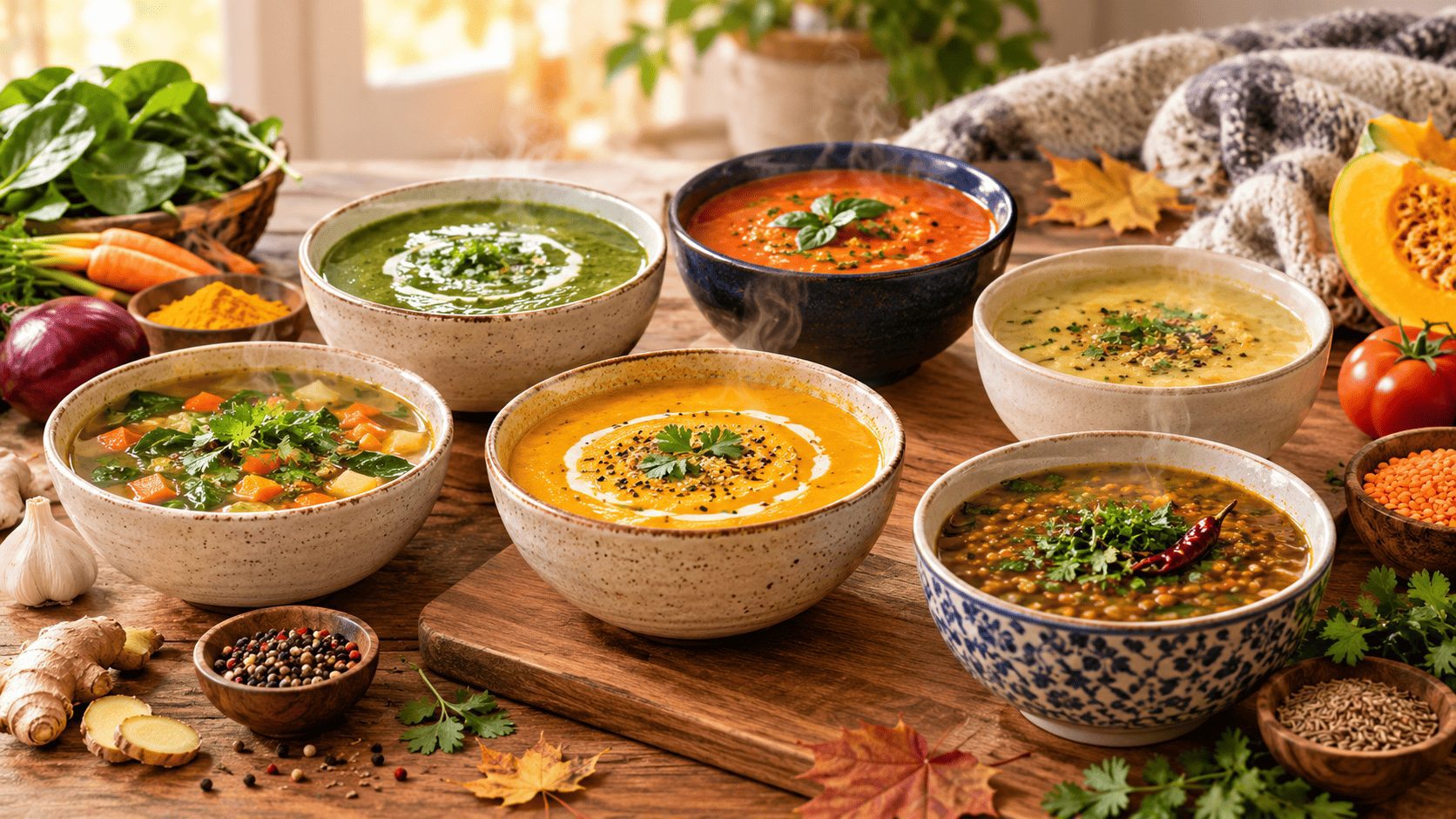
As October arrives and the weather gradually becomes cooler in many parts of India, a warm bowl of homemade soup can be a comforting addition to your daily meals. From traditional tomato soup to nutritious dal soup and seasonal vegetable soups, there are plenty of ways to enjoy healthy, homemade food during autumn and early winter.
Table of Contents
Healthy Indian soup recipes can help you include more vegetables, lentils, and other nutritious ingredients in your diet. They are also easy to customize according to your taste, dietary preferences, and the ingredients available in your kitchen.
Whether you are looking for a light evening meal, a filling starter, or a simple way to use seasonal vegetables, these healthy soup recipes are worth trying.
In this article, you will discover 10 easy Indian soup recipes, their ingredients, preparation methods, nutritional benefits, and practical tips for making delicious homemade soups.
Why Include Soup in Your Diet During October and Early Winter?
Soup can be a convenient way to enjoy a variety of nutritious ingredients when the weather starts getting cooler. Homemade soups allow you to control the amount of salt, oil, cream, and other ingredients you use.
Here are some reasons to include soup in a balanced diet:
- Helps increase vegetable intake: Vegetable soups make it easier to include ingredients such as carrots, tomatoes, spinach, pumpkin, and cauliflower.
- Provides important nutrients: Depending on the ingredients, soups can supply vitamins, minerals, protein, and dietary fiber.
- Offers hydration: Soups contribute to your daily fluid intake.
- Can be filling: Soups prepared with lentils, beans, or other protein-rich ingredients can make a satisfying meal.
- Easy to customize: You can prepare vegetarian, vegan, dairy-free, and higher-protein versions using simple ingredient substitutions.
Soup is not a treatment for colds or other illnesses, and it does not automatically improve immunity. Its nutritional value depends on the ingredients and the overall balance of your diet.
10 Healthy Indian Soup Recipes for October and Early Winter
1. Healthy Tomato Soup
Tomato soup is a classic option that can be prepared with a few everyday kitchen ingredients. Fresh tomatoes provide vitamin C and other beneficial plant compounds, including lycopene.
Ingredients
- 4 medium ripe tomatoes
- 1 small onion, chopped
- 2 garlic cloves
- 1 teaspoon olive oil or another cooking oil
- 2 cups water or low-sodium vegetable stock
- Black pepper and salt to taste
- Fresh coriander for garnish
Method
- Heat the oil in a saucepan and sauté the onion and garlic until softened.
- Add the chopped tomatoes and cook for 5–7 minutes.
- Pour in the water or vegetable stock and simmer until the tomatoes become tender.
- Allow the mixture to cool slightly, then blend until smooth.
- Return the soup to the pan, adjust the consistency, and season with black pepper and a modest amount of salt.
- Garnish with fresh coriander and serve warm.
Health benefits: Tomatoes provide vitamin C and lycopene. Cooking tomatoes can improve the availability of lycopene, while the amount of added salt and cream affects the nutritional profile of the finished soup.
Healthy tip: For a more filling meal, serve tomato soup with whole-wheat toast or a small portion of roasted chickpeas.
2. Indian Mixed Vegetable Soup
Mixed vegetable soup is a practical way to use vegetables already available in your refrigerator. You can change the ingredients according to the season and your preferences.
Ingredients
- 1 small carrot, chopped
- ½ cup finely chopped cabbage
- ½ cup chopped cauliflower
- ½ cup green beans
- 1 small onion
- 2 garlic cloves
- 3 cups water or vegetable stock
- 1 teaspoon cooking oil
- Black pepper and salt to taste
Method
- Heat the oil in a pan and sauté the onion and garlic.
- Add the chopped vegetables and stir for 2–3 minutes.
- Pour in the water or vegetable stock.
- Cover and simmer until the vegetables are tender.
- Blend part of the soup if you prefer a thicker consistency, or leave it chunky.
- Season lightly and serve hot.
Health benefits: Different vegetables provide a variety of vitamins, minerals, and plant compounds. Leaving some vegetables unblended can also help retain their texture.
Healthy tip: Add a handful of peas or cooked chickpeas to make the soup more substantial.
3. Healthy Moong Dal Soup
Moong dal soup is a nutritious Indian option made from split mung beans. It provides plant-based protein and can be adapted to different spice preferences.
Ingredients
- ½ cup yellow moong dal
- 1 small tomato, chopped
- ½ teaspoon cumin seeds
- ¼ teaspoon turmeric powder
- 1 small piece of ginger, grated
- 3–4 cups water
- 1 teaspoon ghee or cooking oil
- Salt and black pepper to taste
- Fresh coriander
Method
- Rinse the moong dal thoroughly.
- Add it to a pressure cooker with the tomato, turmeric, ginger, and water.
- Cook until the dal becomes soft, following your pressure cooker's instructions.
- Heat the ghee or oil in a small pan and add the cumin seeds.
- Once the seeds release their aroma, stir the tempering into the cooked dal.
- Adjust the consistency with water, season lightly, and garnish with coriander.
Health benefits: Moong dal provides plant-based protein, carbohydrates, and fiber. It can help make a soup more satisfying than a broth made mainly from vegetables.
Healthy tip: Add spinach or finely chopped carrots for additional vegetables. Serve with a small portion of roti or rice if you want a more complete meal.
4. Carrot and Ginger Soup
Carrot and ginger soup combines the natural sweetness of carrots with the warm, distinctive flavor of ginger. It is particularly suitable for people who enjoy smooth, mildly spiced soups.
Ingredients
- 3 medium carrots, chopped
- 1 small onion
- 1 teaspoon grated fresh ginger
- 2 cups water or vegetable stock
- 1 teaspoon cooking oil
- Black pepper and salt to taste
Method
- Heat the oil in a saucepan and sauté the onion and ginger.
- Add the carrots and stir for a few minutes.
- Pour in the water or stock and simmer until the carrots become tender.
- Blend the mixture until smooth.
- Return it to the saucepan and adjust the consistency.
- Add black pepper and a little salt before serving.
Health benefits: Carrots are a source of beta-carotene, which the body can convert into vitamin A. Vitamin A supports normal vision and immune function.
Healthy tip: Avoid adding large quantities of cream or sugar. The carrots already provide a naturally sweet flavor.
5. Healthy Pumpkin Soup
Pumpkin is a useful ingredient for autumn and early-winter cooking in India, although availability varies by region. Its mild flavor makes it suitable for smooth soups with Indian spices.
Ingredients
- 2 cups peeled and chopped pumpkin
- 1 small onion
- 1 garlic clove
- ¼ teaspoon cumin powder
- ¼ teaspoon black pepper
- 2 cups water or vegetable stock
- 1 teaspoon cooking oil
- Salt to taste
Method
- Heat the oil in a saucepan and sauté the onion and garlic.
- Add the pumpkin and cumin powder.
- Pour in the water or stock and simmer until the pumpkin is soft.
- Blend until smooth.
- Season with black pepper and a little salt.
- Serve warm with fresh coriander or a small sprinkle of roasted pumpkin seeds.
Health benefits: Pumpkin provides beta-carotene and other nutrients. It is also useful for adding volume and flavor to meals without relying heavily on cream.
Healthy tip: For extra protein, serve the soup with roasted chana or add cooked lentils before blending.
6. Spinach and Garlic Soup
Spinach soup is a simple way to include leafy green vegetables in your diet. Its mild flavor pairs well with garlic, black pepper, and a small amount of cumin.
Ingredients
- 2 cups washed spinach leaves
- 1 small onion
- 2 garlic cloves
- 2 cups water or low-sodium vegetable stock
- 1 teaspoon cooking oil
- A pinch of cumin powder
- Black pepper and salt to taste
Method
- Heat the oil in a saucepan and sauté the onion and garlic.
- Add the washed spinach and cook until the leaves wilt.
- Pour in the water or stock and simmer briefly until the spinach is tender.
- Blend the mixture until smooth.
- Add cumin powder, black pepper, and salt.
- Reheat gently and serve.
Health benefits: Spinach provides folate, vitamin K, and other nutrients. Pairing leafy greens with a varied diet helps you obtain a broader range of essential nutrients.
Healthy tip: Add cooked moong dal for more protein and a thicker texture. People who need to manage their vitamin K intake because of medication should follow their healthcare professional's advice rather than making sudden dietary changes.
7. Indian Lentil and Vegetable Soup
If you want a filling soup that can serve as part of a main meal, lentils and vegetables are a useful combination. This recipe can be prepared with masoor dal or another lentil available in your kitchen.
Ingredients
- ½ cup red lentils or masoor dal
- 1 small carrot, chopped
- 1 small tomato, chopped
- ½ onion, chopped
- ½ teaspoon cumin seeds
- ¼ teaspoon turmeric powder
- 3 cups water
- 1 teaspoon cooking oil
- Salt and black pepper to taste
Method
- Rinse the lentils thoroughly.
- Heat the oil in a saucepan and add the cumin seeds.
- Add the onion, tomato, carrot, and turmeric.
- Stir for a few minutes, then add the lentils and water.
- Simmer until the lentils and vegetables become soft.
- Mash lightly or blend part of the soup to create a thicker texture.
- Season and serve warm.
Health benefits: Lentils provide plant-based protein, fiber, iron, and folate. Combining them with vegetables adds variety to the meal.
Healthy tip: Add lemon juice after cooking for a fresh flavor. Vitamin C can improve the absorption of non-heme iron from plant foods when consumed as part of the same meal.
8. Cauliflower and Pepper Soup
Cauliflower is a versatile vegetable that works well in creamy-textured soups without requiring large amounts of dairy cream.
Ingredients
- 2 cups cauliflower florets
- 1 small onion
- 1 garlic clove
- 2 cups vegetable stock or water
- 1 teaspoon cooking oil
- ¼ teaspoon black pepper
- Salt to taste
Method
- Heat the oil in a saucepan and sauté the onion and garlic.
- Add the cauliflower florets and stir briefly.
- Pour in the water or stock.
- Cover and simmer until the cauliflower is tender.
- Blend until smooth and return the soup to the pan.
- Season with black pepper and salt, then serve warm.
Health benefits: Cauliflower provides vitamin C, folate, and fiber. Its soft texture makes it suitable for a smooth soup.
Healthy tip: Add a few spoonfuls of cooked white beans or moong dal before blending if you would like more protein and a creamier consistency.
9. Sweet Corn and Vegetable Soup
Sweet corn soup is a familiar Indo-Chinese-style favorite that can be prepared at home with a few simple ingredients. Using plenty of vegetables and controlling the amount of salt makes it a practical everyday option.
Ingredients
- 1 cup sweet corn kernels
- ½ cup finely chopped carrots
- ½ cup chopped beans
- 2 tablespoons chopped spring onion
- 3 cups water or low-sodium vegetable stock
- 1 teaspoon cooking oil
- Black pepper and salt to taste
Method
- Heat the oil in a saucepan and sauté the spring onion.
- Add the carrots, beans, and sweet corn.
- Pour in the water or stock and simmer until the vegetables are tender.
- Blend a small portion of the corn with some soup liquid, then return it to the pan for a thicker texture.
- Add black pepper and a modest amount of salt.
- Serve hot.
Health benefits: Corn provides carbohydrates, fiber, and some B vitamins. Adding other vegetables increases the variety of nutrients in the soup.
Healthy tip: You generally do not need to add much cornflour, butter, or cream to achieve a pleasant consistency.
10. Spiced Beetroot Soup
Beetroot soup has a vibrant color and a naturally earthy flavor. A little ginger, cumin, and black pepper can give this soup an Indian-inspired taste.
Ingredients
- 1 medium beetroot, peeled and chopped
- 1 small carrot
- ½ onion
- 1 teaspoon grated ginger
- ¼ teaspoon cumin powder
- 2 cups water or vegetable stock
- 1 teaspoon cooking oil
- Salt and black pepper to taste
Method
- Heat the oil in a saucepan and sauté the onion and ginger.
- Add the beetroot, carrot, and cumin powder.
- Pour in the water or stock and simmer until the vegetables are tender.
- Blend until smooth.
- Adjust the consistency and season lightly.
- Serve warm with a little lemon juice if desired.
Health benefits: Beetroot provides folate and other nutrients, while carrots contribute beta-carotene. Beetroot also contains naturally occurring nitrates, although the effects of eating it vary according to the person and the amount consumed.
Healthy tip: Beetroot can temporarily turn urine or stools pinkish-red in some people. This is not always a sign of illness, but persistent or unexplained blood should be medically assessed.
Which Healthy Soup Is Best for October and Early Winter?
The best soup depends on your nutritional needs, taste preferences, and the ingredients you have available.
| Soup | Main nutritional highlight | Best suited for |
|---|---|---|
| Tomato soup | Vitamin C and lycopene | A light starter |
| Mixed vegetable soup | Variety of vitamins and minerals | Increasing vegetable intake |
| Moong dal soup | Plant-based protein | A light, filling meal |
| Carrot and ginger soup | Beta-carotene | A smooth, mildly sweet soup |
| Pumpkin soup | Beta-carotene | A comforting seasonal option |
| Spinach soup | Folate and vitamin K | Adding leafy greens |
| Lentil and vegetable soup | Protein, fiber, and folate | A more substantial meal |
| Cauliflower soup | Vitamin C and fiber | A smooth, creamy-textured soup |
| Sweet corn soup | Carbohydrates and fiber | A family-friendly starter |
| Beetroot soup | Folate and naturally occurring nitrates | A colorful vegetable-based meal |
Remember that the nutrient content of each recipe depends on portion size, ingredient quantities, and preparation methods.
Tips for Making Healthier Homemade Soups
A few simple changes can make your homemade soups more nutritious and enjoyable.
1. Use seasonal and locally available vegetables
Choose vegetables based on what is fresh and affordable in your area. Carrots, pumpkin, spinach, cauliflower, tomatoes, and other vegetables can all work well, depending on local availability.
2. Add lentils or beans for protein
Vegetable broth alone may not provide enough protein to make a filling meal. Adding moong dal, masoor dal, chickpeas, or beans can make the soup more substantial.
3. Limit excess salt
Commercial stock cubes, packaged soup powders, sauces, and seasoning mixes can contain substantial amounts of sodium. Use low-sodium stock where possible and season homemade soup gradually.
4. Avoid relying on cream for thickness
Blended vegetables and cooked lentils can provide a creamy texture without requiring large amounts of cream or butter.
5. Include a source of protein when needed
If soup is your main meal, consider pairing it with lentils, beans, paneer, tofu, or another suitable protein source.
6. Store soup safely
Refrigerate leftovers promptly in shallow, covered containers. As a general food-safety guideline, refrigerate cooked food within two hours, or within one hour when the surrounding temperature exceeds 32°C. Use refrigerated leftovers within three to four days and reheat thoroughly. Freeze portions you will not eat within that period.
Healthy Indian soup recipes are an easy way to enjoy warm, homemade meals during October and early winter. From tomato and mixed vegetable soup to moong dal, pumpkin, and lentil soup, you can choose from plenty of options using everyday Indian ingredients.
For a light starter, try tomato or carrot soup. If you want something more filling, choose moong dal or lentil and vegetable soup. To increase your vegetable intake, experiment with spinach, pumpkin, cauliflower, and seasonal produce available in your region.
The key is to prepare soups with a variety of nutritious ingredients, moderate amounts of salt, and enough protein to suit your needs. Pair them with other balanced foods to create satisfying meals throughout the cooler months.
Try one of these recipes this week and discover which homemade soup becomes your favorite.

References