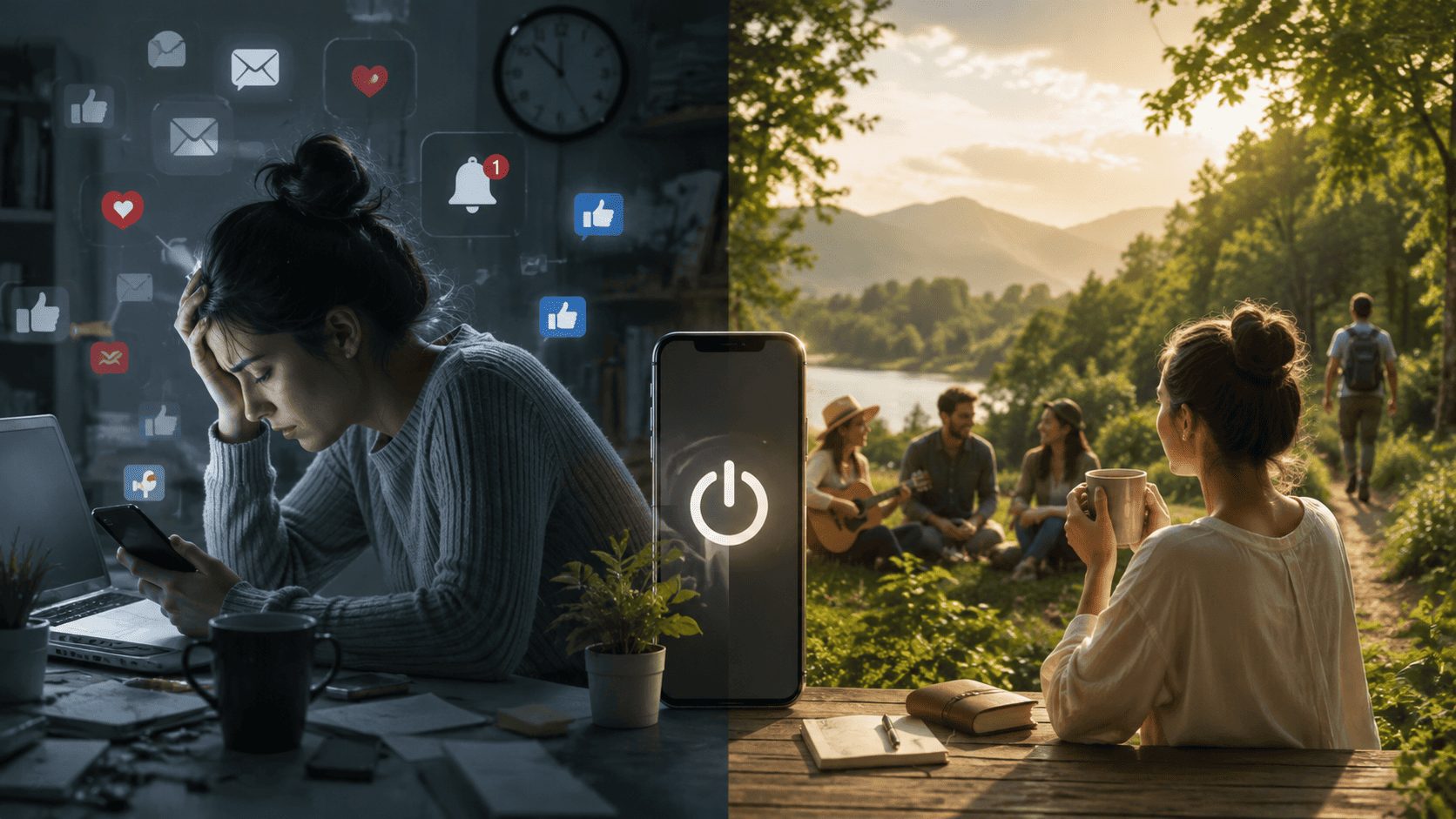
In today’s connected world, smartphones, social media, streaming platforms, and constant notifications have become part of everyday life. While digital technology makes communication and work easier, excessive screen time can leave people feeling distracted, overwhelmed, and mentally exhausted. This is why digital detox challenges are becoming increasingly popular.
A digital detox challenge encourages people to temporarily reduce or avoid unnecessary use of digital devices. The goal is not to reject technology completely, but to develop healthier and more intentional digital habits.
Table of Contents
What Is a Digital Detox Challenge?
A digital detox challenge is a planned period during which you limit your use of smartphones, computers, social media, gaming platforms, or other digital devices.
A challenge can last for a few hours, one day, a weekend, or even several weeks. For example, someone might decide to avoid social media after 8 p.m. for seven days, while another person may spend an entire weekend without using non-essential apps.
The key is to create realistic boundaries that fit your lifestyle.
Why Are Digital Detox Challenges Important?
Excessive digital consumption can make it difficult to focus on important tasks. Constant notifications and social media updates can encourage people to check their phones repeatedly throughout the day.
A digital detox can help you:
- Reduce unnecessary screen time
- Improve concentration and productivity
- Create more time for hobbies and outdoor activities
- Spend quality time with family and friends
- Develop better sleep habits
- Reduce digital distractions
- Become more aware of your technology use
Digital detoxing is therefore less about completely abandoning technology and more about using it with greater awareness.
Common Digital Detox Challenges
1. The 24-Hour No-Social-Media Challenge
For one full day, avoid platforms such as social networking and short-video apps. Use your phone only when necessary for calls, navigation, work, or emergencies.
This challenge can help you understand how often you automatically reach for social media.
2. The No-Phone-Before-Bed Challenge
Avoid using your smartphone for at least 30–60 minutes before going to sleep. Instead, read a book, listen to relaxing music, stretch, or prepare for the next day.
Keeping your phone away from your bed can make this challenge easier.
3. The Screen-Free Morning Challenge
Start your day without immediately checking messages, emails, or social media. Spend the first 30 minutes of your morning exercising, journaling, having breakfast, or planning your day.
This can help you begin the day with fewer distractions.
4. The Digital-Free Weekend Challenge
Try limiting non-essential digital entertainment for an entire weekend. Replace scrolling and streaming with activities such as walking, cooking, reading, meeting friends, or exploring a new place.
This is one of the more demanding digital detox challenges, but it can also be highly rewarding.
5. The Notification Detox
Turn off unnecessary notifications from social media, shopping apps, games, and other non-essential services.
You can keep notifications enabled for important calls, messages, work, or safety-related applications. Reducing interruptions can make your phone feel much less demanding.
Challenges You May Face During a Digital Detox
A digital detox sounds simple, but changing established habits can be difficult.
Feeling Bored
Many people use their phones whenever they have a free moment. Without that instant entertainment, boredom may appear. Instead of immediately returning to your device, use the opportunity to discover offline activities.
Fear of Missing Out
You may worry about missing messages, news, trends, or social events. Setting specific times to check essential communications can make this feeling easier to manage.
Work and Study Requirements
Completely avoiding digital devices may not be practical for students and professionals. A better approach is to distinguish between necessary screen use and recreational screen use.
Automatic Phone Checking
Sometimes people unlock their phones without consciously deciding to do so. Keeping the device out of reach and removing distracting apps from the home screen can help break this habit.
How to Make a Digital Detox Challenge Successful
Start small rather than trying to eliminate all technology overnight.
Choose one specific behavior to change, set a realistic time limit, and decide what you will do instead. For example, replace 30 minutes of evening scrolling with reading, exercise, meditation, or conversation.
It can also help to track your screen time before and after the challenge. This gives you a clearer picture of your habits and helps you identify which changes are actually useful.
Digital Detox Does Not Mean Quitting Technology
Technology is an important part of modern life. Smartphones, computers, and the internet provide valuable tools for education, communication, business, entertainment, and creativity.
The purpose of a digital detox is therefore balance, not complete disconnection. After completing a challenge, you can create sustainable habits such as phone-free meals, scheduled social-media breaks, screen-free bedrooms, or designated offline hours.
Digital detox challenges can be a simple way to reassess your relationship with technology. Whether you choose a one-hour break, a social-media-free day, or a complete digital-free weekend, the experience can help you become more conscious of how and why you use your devices.
The most effective digital detox is one that leads to long-term habits. Instead of asking, “How can I stop using technology?” ask, “How can I use technology more intentionally?”
A healthier digital lifestyle is not about being offline all the time. It is about making sure technology supports your life rather than constantly distracting you from it.

References