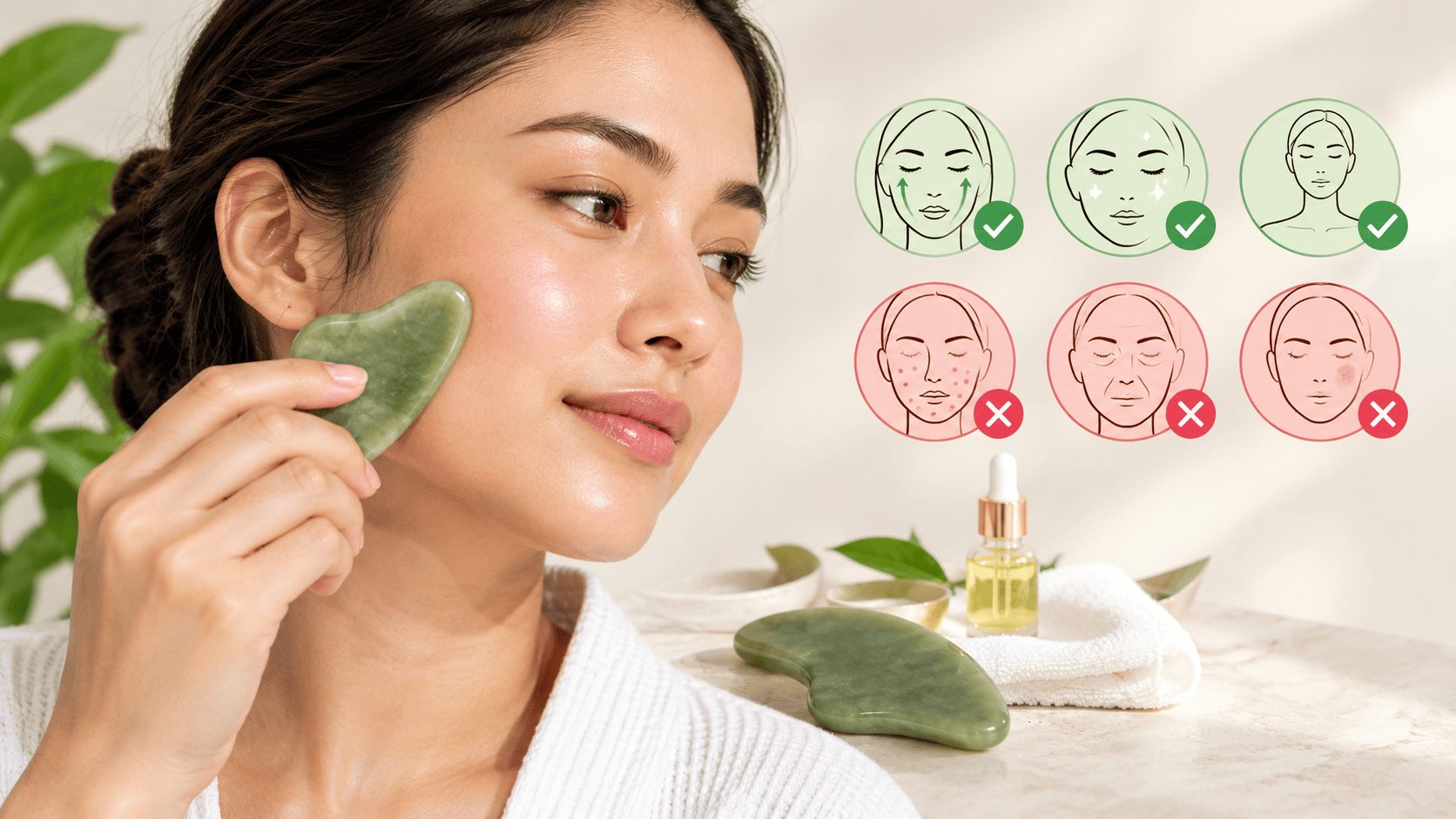
If you have ever wondered how people achieve a refreshed, sculpted-looking face using a small, smooth stone, you have probably come across gua sha. This traditional massage technique has become a popular part of modern skincare routines, especially among people looking for a simple way to relax facial muscles and care for their skin at home.
Table of Contents
- What Is Gua Sha?
- What Are the Benefits of Gua Sha?
- What Gua Sha Can’t Do
- How to Use Gua Sha for Beginners
- How Often Should Beginners Use Gua Sha?
- Which Gua Sha Tool Is Best for Beginners?
- Is Gua Sha Safe for Everyone?
- Gua Sha vs. Facial Roller: What Is the Difference?
- Common Gua Sha Mistakes Beginners Should Avoid
- Frequently Asked Questions About Gua Sha
- Is Gua Sha Worth Trying for Beginners?
However, there is more to gua sha than social media trends and before-and-after pictures. While regular facial massage may temporarily reduce the appearance of puffiness and help you feel more relaxed, it is not a miracle treatment for wrinkles, acne, or permanent facial sculpting.
In this beginner-friendly guide, we will explain what gua sha is, explore its potential benefits, discuss its limitations, and show you how to use a gua sha tool safely as part of your skincare routine.
What Is Gua Sha?
Gua sha is a traditional East Asian practice that involves gently scraping or gliding a smooth-edged tool across the skin. Traditionally, it has been used on different areas of the body as part of traditional medicine practices.
Modern facial gua sha generally uses lighter pressure and a smooth stone or similar tool to massage the face and neck. Common materials include jade, rose quartz, and stainless steel.
Unlike traditional body gua sha, which may involve firmer strokes and produce temporary red or purple marks, facial gua sha should be gentle. You do not need to scrape hard or create redness to get the benefits of a relaxing facial massage.
Today, many people incorporate facial gua sha into their skincare routines to help temporarily reduce puffiness, encourage relaxation, and make their skin look refreshed.
What Are the Benefits of Gua Sha?
Gua sha may offer several benefits when used gently and consistently. However, it is important to distinguish between temporary cosmetic effects and claims that have not been established by strong scientific evidence.
1. It May Help Reduce Facial Puffiness
One of the most popular reasons people try facial gua sha is to reduce the appearance of a puffy face, particularly in the morning.
Gentle massage may help move excess fluid through the tissues and temporarily reduce the appearance of puffiness. The results can vary depending on factors such as sleep, hydration, allergies, and individual anatomy.
For best results, use light pressure and slow movements rather than pressing the tool firmly against your skin.
What to expect: Your face may look temporarily less puffy and more refreshed, but the effect is not permanent.
2. It Can Make Your Skin Look More Refreshed
A gentle facial massage can temporarily increase local blood flow. This may contribute to a healthy-looking flush and a refreshed appearance.
However, increased circulation does not automatically mean improved collagen production, fewer wrinkles, or healthier skin over the long term.
What to expect: Your skin may look a little brighter immediately after massage, although results differ from person to person.
3. It May Help You Relax
Facial tension can build up around the jaw, forehead, and temples, especially after a long day of work or screen time.
Slow, gentle gua sha movements can become a relaxing self-care ritual. The massage may help you become more aware of facial tension and encourage you to slow down.
What to expect: You may feel more relaxed, but gua sha is not a substitute for medical treatment for persistent jaw pain, headaches, or other symptoms.
4. It Can Support a Consistent Skincare Routine
Gua sha can make your skincare routine feel more enjoyable and intentional. Pairing it with a gentle cleanser, moisturizer, and sunscreen can help you build habits that support skin health.
The tool itself does not replace skincare products or treat underlying skin conditions.
What to expect: The main benefit may be the relaxing routine rather than a dramatic change in your skin.
5. It May Temporarily Improve the Appearance of Facial Contours
Facial gua sha is often promoted as a natural way to sculpt the jawline or define the cheekbones.
Gentle massage may temporarily change the appearance of facial puffiness, making natural contours look more noticeable. However, there is not enough high-quality evidence to conclude that gua sha permanently reshapes the face or removes facial fat.
What to expect: You may notice a temporary difference in definition, but results are subtle and vary between individuals.
What Gua Sha Can’t Do
Understanding the limitations of gua sha is just as important as knowing its potential benefits.
1. It Cannot Permanently Lift or Sculpt Your Face
Gua sha tools cannot permanently change your facial bone structure, remove fat from specific areas, or create a permanently sharper jawline.
Any immediate difference in facial shape is more likely to be associated with temporary changes in puffiness, lighting, facial expression, or other factors.
If you enjoy gua sha, think of it as a facial massage technique rather than a non-surgical facelift.
2. It Cannot Erase Wrinkles
You may see claims that gua sha smooths fine lines and reverses skin aging. There is currently insufficient strong clinical evidence to support these claims.
Gentle massage may temporarily make skin appear smoother, particularly when you use a suitable moisturizer or facial oil. However, it does not reliably remove established wrinkles or replace treatments designed to address signs of aging.
For long-term skin protection, daily broad-spectrum sunscreen and an appropriate skincare routine have a stronger evidence base.
3. It Cannot Cure Acne
Gua sha is not an established treatment for acne. Rubbing a tool over inflamed pimples can cause irritation, worsen discomfort, or spread bacteria if the tool is not cleaned properly.
If you have active acne, painful breakouts, or sensitive skin, avoid massaging affected areas. Consider evidence-based acne treatments or consult a dermatologist if breakouts persist.
4. It Cannot Remove Facial Fat
No facial massage tool can selectively burn fat from the cheeks, chin, or jawline.
Although gua sha may temporarily reduce the appearance of puffiness, this is different from losing fat. Claims that daily gua sha permanently eliminates a double chin or creates a specific face shape are not supported by reliable evidence.
5. It Cannot Detoxify Your Body
Some beauty claims suggest that gua sha removes toxins from the skin or cleanses the body. There is no good evidence that facial gua sha detoxifies the body in this way.
Your liver and kidneys perform the essential work of processing and eliminating waste products. Facial massage should be viewed as a cosmetic or relaxation practice, not a detox treatment.
How to Use Gua Sha for Beginners
If you are new to facial gua sha, start with a simple routine. You do not need an expensive tool or a complicated series of movements.
Step 1: Clean Your Face and Tool
Wash your face with a gentle cleanser and clean your gua sha tool according to the manufacturer's instructions.
Make sure the tool has no cracks, chips, or rough edges that could scratch your skin.
Step 2: Apply a Suitable Facial Oil or Moisturizer
Apply enough facial oil or moisturizer to allow the tool to glide smoothly without pulling your skin.
Choose a product that suits your skin type and does not trigger irritation or breakouts. If you have acne-prone skin, consider a lightweight, non-comedogenic product.
Step 3: Hold the Tool at a Shallow Angle
Hold the gua sha tool at a relatively flat angle against your skin rather than pointing its edge directly into your face.
Use light pressure. Facial gua sha should feel comfortable and should not cause pain, bruising, or significant redness.
Step 4: Start at the Neck
Using gentle strokes, glide the tool along the side of your neck in a comfortable direction. Avoid pressing on the front of your neck, particularly over the throat.
Keep the movements slow and controlled.
Step 5: Massage Along Your Jawline
Place the curved edge of the tool near your chin and gently glide it outward toward your ear.
Repeat a few times on each side, using minimal pressure. Avoid dragging the tool repeatedly over the same area.
Step 6: Move Across Your Cheeks
Start near the side of your nose and glide the tool outward across your cheek toward your ear.
Keep the tool in contact with the skin without pulling or stretching it excessively.
Step 7: Finish With Your Forehead
Place the tool near the middle of your forehead and glide it gently outward toward your temples.
You can also use soft upward strokes across the forehead, provided they feel comfortable and do not irritate your skin.
Step 8: Clean Your Tool After Use
Wash the tool according to its care instructions and dry it thoroughly before storing it.
Do not share your gua sha tool with other people, particularly if you have acne, skin infections, or broken skin.
Beginner tip: Start with a short session of approximately three to five minutes. There is no need to use excessive pressure or perform dozens of strokes to achieve a relaxing massage.
How Often Should Beginners Use Gua Sha?
There is no scientifically established ideal frequency for facial gua sha. Your routine should depend on your skin's tolerance and personal preference.
If your skin is healthy and comfortable with the technique, you could begin with two or three short sessions per week and see how it responds. You may choose to use it more frequently if it remains comfortable, but daily use is not necessary to maintain healthy skin.
Stop if you notice persistent redness, irritation, tenderness, bruising, or increased breakouts.
Consistency should mean maintaining a gentle, comfortable routine, not applying more pressure or spending longer sessions on your face.
Which Gua Sha Tool Is Best for Beginners?
The best gua sha tool is one that is smooth, comfortable to hold, and easy to clean.
Here are some common options:
- Jade: A traditional choice with a smooth surface and a familiar appearance.
- Rose quartz: Popular for its attractive appearance and cool feel.
- Stainless steel: Often easy to clean and durable when properly manufactured.
- Other smooth materials: May also work well if they are designed for facial massage and have no sharp edges.
There is limited evidence that one material provides better skincare results than another. Choose a tool based on comfort, hygiene, durability, and ease of use rather than claims that a particular stone has special skin-healing properties.
Is Gua Sha Safe for Everyone?
Gentle facial gua sha is generally well tolerated by many people, but it is not suitable for every skin condition.
Avoid using the tool over:
- Open wounds, cuts, or sunburn.
- Active skin infections or cold sores.
- Inflamed acne lesions or severely irritated skin.
- Areas with unexplained bruising, swelling, or pain.
People with fragile skin, bleeding disorders, or conditions that increase bruising should seek medical advice before trying gua sha. If you have recently undergone facial surgery, injections, laser treatment, or another cosmetic procedure, ask your treating professional when massage is safe.
Do not apply strong pressure around the eyes, over the throat, or directly over prominent blood vessels. Stop immediately if the massage causes pain, unusual swelling, or bruising.
If you develop persistent irritation or have a skin condition that is not improving, consult a qualified healthcare professional.
Gua Sha vs. Facial Roller: What Is the Difference?
Gua sha and facial rollers are both popular facial massage tools, but they work differently.
| Feature | Gua Sha | Facial Roller |
|---|---|---|
| Design | Smooth, contoured stone or tool | Rolling head or pair of rollers |
| Technique | Gliding strokes across the skin | Rolling movements over the face |
| Pressure | Manually controlled | Usually easier to keep light and even |
| Main appeal | Targeted massage and a relaxing ritual | Quick, simple facial massage |
| Permanent sculpting | Not established | Not established |
Neither tool has strong evidence showing that it permanently reshapes the face or reverses skin aging.
If you prefer a hands-on technique and enjoy controlled movements, gua sha may suit you. If you want something simple and quick, a facial roller may be more convenient.
Common Gua Sha Mistakes Beginners Should Avoid
A few simple precautions can make your routine more comfortable.
Using too much pressure: Hard scraping is unnecessary for facial massage and can cause irritation or bruising.
Using the tool on dry skin: Insufficient slip can create friction and pull on the skin.
Expecting instant, permanent results: Temporary changes in puffiness should not be confused with lasting facial sculpting.
Massaging active acne: Inflamed blemishes may become more irritated with friction and pressure.
Skipping tool hygiene: Clean your tool after every use to reduce the risk of contamination.
Ignoring discomfort: Pain, bruising, or persistent redness are signs to stop rather than continue the routine.
Replacing essential skincare: Gua sha should complement—not replace—cleansing, moisturizing, sunscreen, and appropriate treatment for skin concerns.
Frequently Asked Questions About Gua Sha
Does gua sha actually work?
Gua sha can provide a relaxing facial massage and may temporarily reduce the appearance of puffiness. However, scientific evidence for lasting cosmetic benefits, such as wrinkle reduction or permanent facial sculpting, remains limited.
How long does it take to see results from gua sha?
Some people notice a temporary reduction in puffiness immediately after a session. More dramatic or long-lasting changes should not be expected, and there is no established timeline for permanent cosmetic results.
Can I use gua sha every day?
Some people tolerate gentle facial massage daily, but daily use is not necessary. Beginners can start with a few short sessions per week and adjust based on comfort and skin response.
Should I use gua sha in the morning or at night?
Either is fine. Morning massage may be appealing if you experience facial puffiness after waking up, while an evening session can be a relaxing way to wind down. Choose the time that fits your routine.
Should I use gua sha before or after moisturizer?
Use gua sha after cleansing and applying a product that provides enough slip, such as a suitable facial oil or moisturizer. Avoid dragging the tool across dry skin.
Can gua sha make your face slimmer?
Gua sha cannot remove facial fat or permanently change your facial structure. It may temporarily make your face appear less puffy, which can make existing contours more noticeable.
Can gua sha help with a double chin?
There is no good evidence that gua sha removes a double chin. Any temporary difference in appearance may be related to changes in puffiness rather than fat loss.
Is gua sha suitable for sensitive skin?
It depends on the cause and severity of the sensitivity. Use caution, avoid active irritation, and discontinue the practice if it causes redness or discomfort. People with persistent skin sensitivity may benefit from professional advice before trying it.
Can I use gua sha without facial oil?
You should use a suitable product that allows the tool to glide without pulling the skin. A moisturizer may work as well as an oil, depending on its texture and your skin type.
Is Gua Sha Worth Trying for Beginners?
Gua sha can be a useful addition to a simple skincare routine if you enjoy facial massage and understand what it can realistically achieve. It may temporarily reduce puffiness, help you relax, and leave your skin looking refreshed.
However, it cannot permanently sculpt your face, remove facial fat, cure acne, or reliably erase wrinkles. Many of the more dramatic claims surrounding gua sha go beyond the available scientific evidence.
If you decide to try it, choose a smooth and easy-to-clean tool, apply a suitable moisturizer or facial oil, and use gentle movements. Focus on comfort rather than pressure, and stop if your skin becomes irritated.
Ultimately, the best skincare routine is one that supports your skin's needs and relies on realistic expectations. Gua sha can be a pleasant self-care ritual, but healthy skin starts with gentle cleansing, consistent moisturizing, sun protection, and appropriate care for any underlying skin concerns.

References