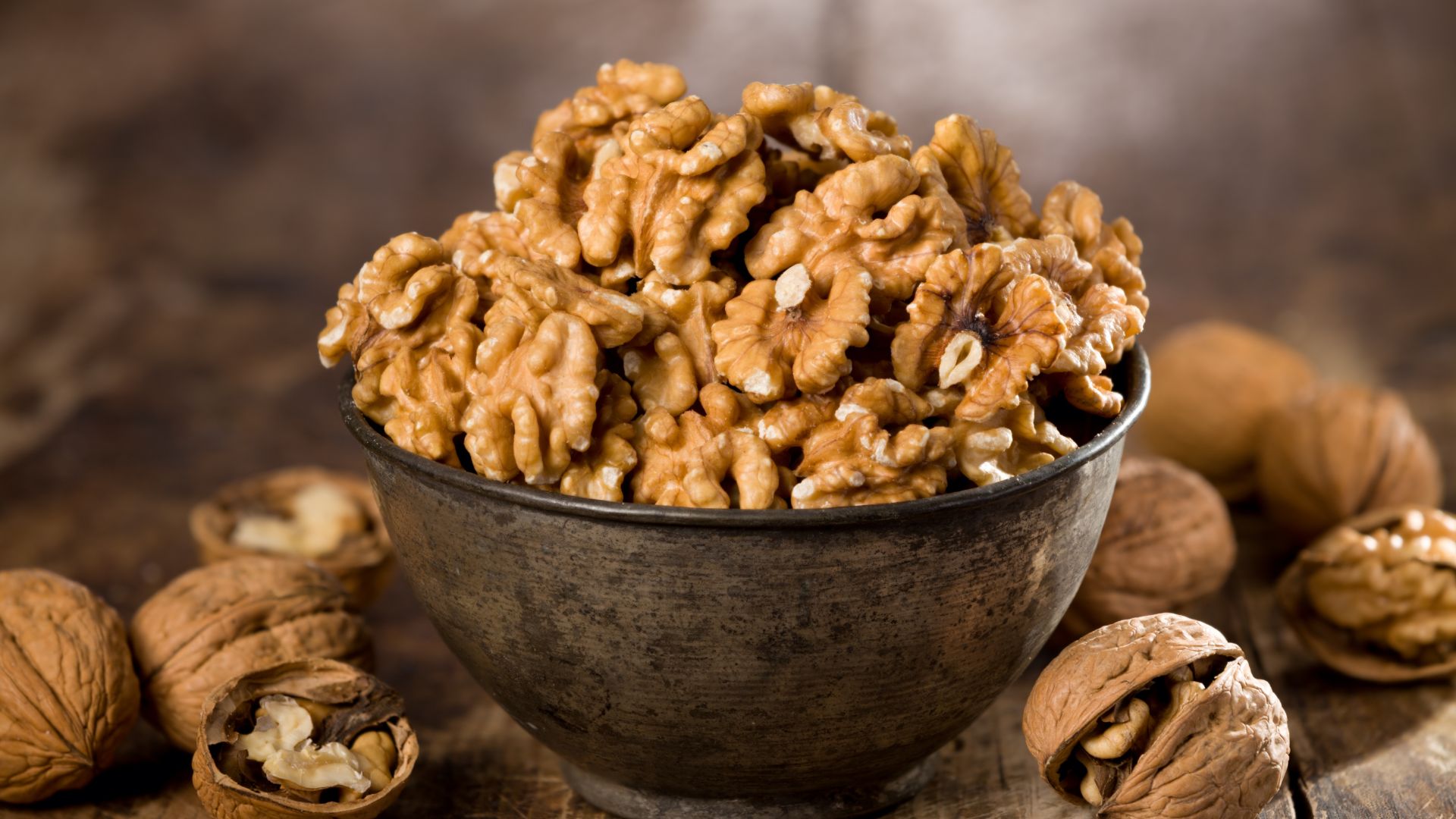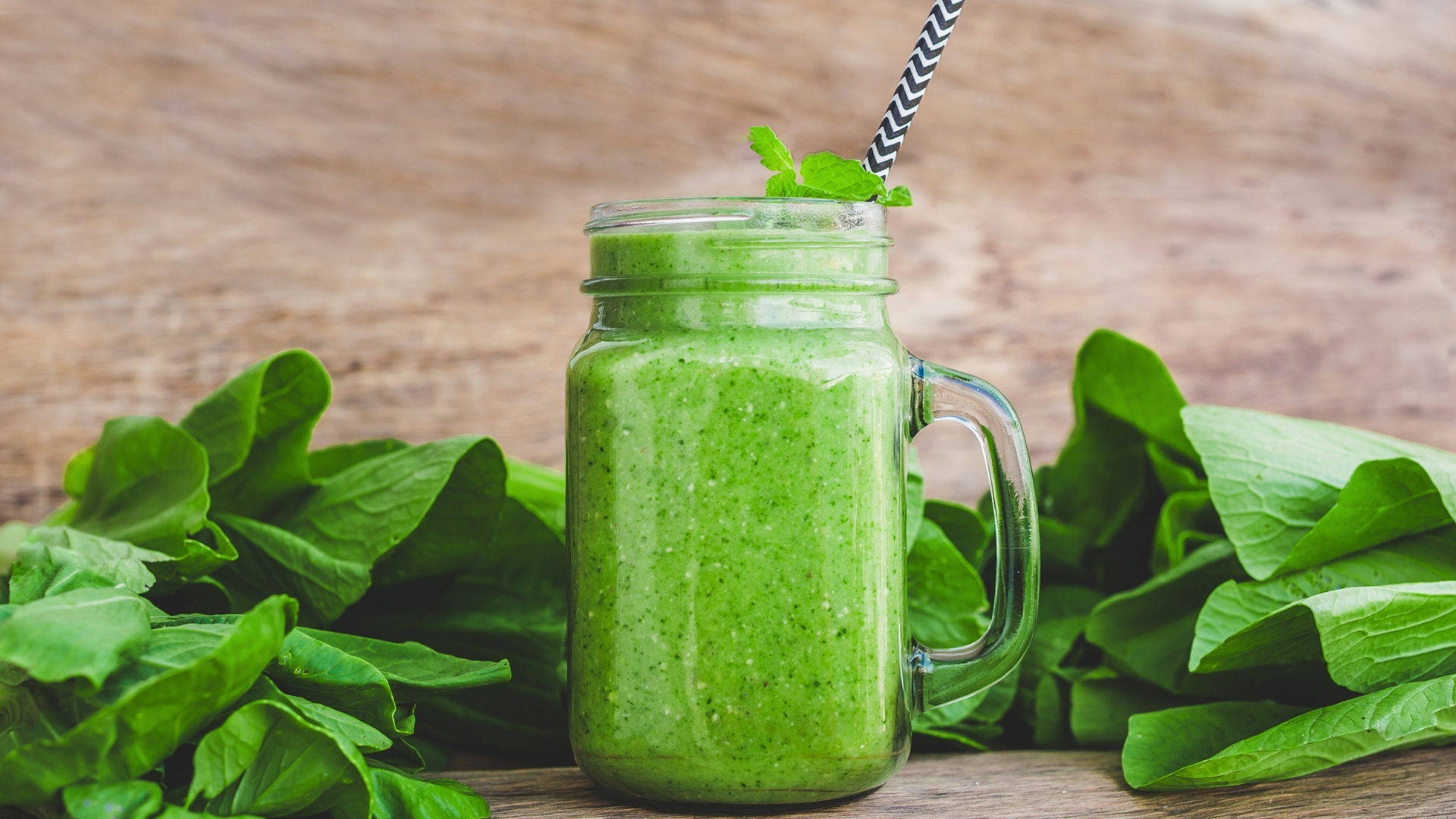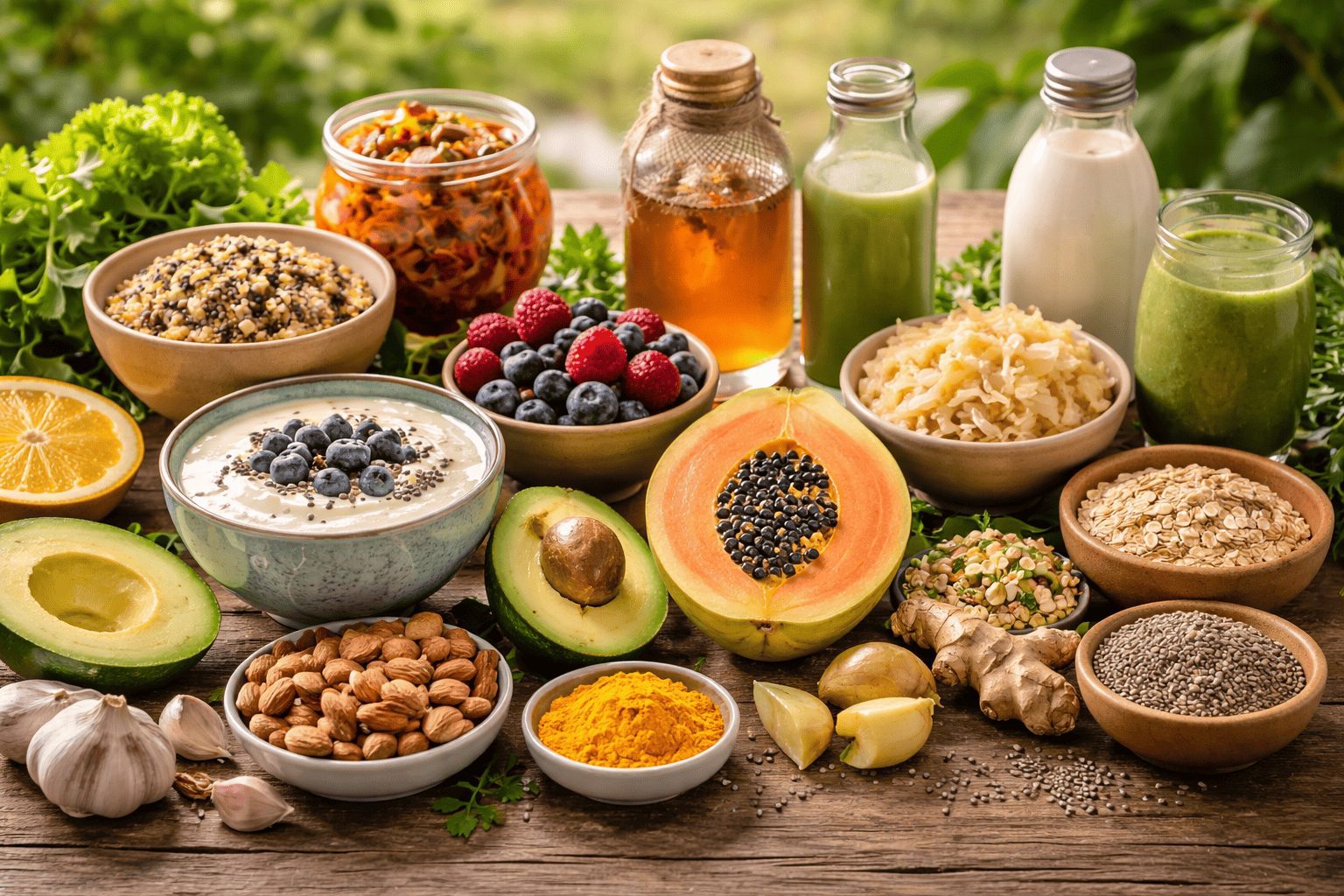
Your gut does much more than just digest food—it plays a central role in your immune system, mental health, and overall well-being. A balanced gut microbiome helps your body absorb nutrients efficiently, fight harmful bacteria, and maintain energy levels.
Including gut-healing foods that improve digestion in your daily diet can repair your gut lining, restore healthy bacteria, and prevent common digestive issues naturally.
Table of Contents
- Why Gut Health Is Important
- Understanding the Gut Microbiome
- Signs Your Gut Needs Healing
- Probiotic-Rich Foods: Restoring Good Bacteria
- Prebiotic Foods: Fuel for Healthy Bacteria
- Fiber-Rich Foods: Supporting Digestive Movement
- Anti-Inflammatory Foods: Healing the Gut Lining
- Hydrating Foods and Fluids
- Gut-Healing Superfoods to Add Daily
- Foods to Avoid for Better Digestion
- Lifestyle Tips to Improve Gut Health
- How Long Does It Take to Heal Your Gut
Why Gut Health Is Important
The gut contains trillions of microorganisms that influence digestion, metabolism, and immunity. When this balance is disrupted, it can lead to various health problems.
A healthy gut helps:
Break down food effectively
Absorb essential nutrients
Support immune function
Regulate mood through the gut-brain connection
Poor gut health can contribute to chronic issues such as inflammation, fatigue, and weakened immunity.
Understanding the Gut Microbiome
The gut microbiome is a community of good and bad bacteria living in your digestive tract. Maintaining a balance between these bacteria is key to good digestion.
Factors that disrupt gut health include:
Poor diet (high in processed foods)
Stress and lack of sleep
Overuse of antibiotics
Sedentary lifestyle
Restoring this balance through proper nutrition is essential.
Signs Your Gut Needs Healing
Many people ignore early signs of digestive imbalance. Recognizing them can help prevent long-term issues.
Watch for:
Frequent bloating and gas
Constipation or irregular bowel movements
Acid reflux or indigestion
Skin issues like acne or eczema
Low energy and brain fog
These symptoms often indicate inflammation or an imbalance in gut bacteria.
Probiotic-Rich Foods: Restoring Good Bacteria
Probiotics are live beneficial bacteria that help restore the natural balance in your gut.
Top probiotic foods include:
Yogurt with live cultures
Kefir (a fermented milk drink)
Kimchi and sauerkraut
Fermented pickles
Regular consumption improves digestion, reduces bloating, and strengthens immunity.
Prebiotic Foods: Fuel for Healthy Bacteria
Prebiotics are non-digestible fibers that feed good bacteria, helping them grow and function effectively.
Best prebiotic foods:
Garlic and onions
Leeks
Bananas (especially slightly unripe)
Asparagus and chicory root
Combining prebiotics with probiotics creates a strong foundation for gut health.
Fiber-Rich Foods: Supporting Digestive Movement
Dietary fiber is essential for maintaining smooth and regular digestion.
There are two types:
Soluble fiber (found in oats, apples) – helps slow digestion and control blood sugar
Insoluble fiber (found in whole grains, vegetables) – adds bulk to stool and prevents constipation
High-fiber foods include:
Whole grains
Legumes (lentils, beans)
Fruits and vegetables
Seeds like chia and flax
Fiber also helps detoxify the body by removing waste efficiently.
Anti-Inflammatory Foods: Healing the Gut Lining
Chronic inflammation can damage the gut lining and lead to digestive disorders.
Healing foods include:
Ginger – reduces nausea and inflammation
Turmeric – contains curcumin, a powerful anti-inflammatory compound
Fatty fish – rich in omega-3 fatty acids
Leafy greens – packed with antioxidants
These foods help repair the gut lining and improve digestion over time.
Hydrating Foods and Fluids
Proper hydration is essential for digestion, nutrient absorption, and toxin elimination.
Include:
Water-rich fruits like watermelon and oranges
Vegetables like cucumber and celery
Herbal teas such as peppermint and ginger tea
Bone broth for gut healing and nourishment
Hydration helps soften stool and supports smooth digestion.
Gut-Healing Superfoods to Add Daily
Some foods are especially powerful for gut repair:
Bone broth – supports gut lining with collagen
Apple cider vinegar – aids digestion and balances stomach acid
Chia seeds – rich in fiber and omega-3
Papaya – contains enzymes that improve digestion
Adding these regularly can accelerate gut healing.
Foods to Avoid for Better Digestion
Certain foods can harm your gut and slow down digestion.
Avoid or limit:
Highly processed foods
Refined sugar
Artificial sweeteners
Excess alcohol
Fried and greasy foods
These can disrupt gut bacteria and increase inflammation.
Lifestyle Tips to Improve Gut Health
Food alone is not enough—your daily habits also impact digestion.
Healthy practices include:
Eating slowly and chewing thoroughly
Managing stress through meditation or yoga
Getting enough sleep
Staying physically active
A balanced lifestyle enhances the benefits of gut-healing foods.
How Long Does It Take to Heal Your Gut
Gut healing is a gradual process. With consistent healthy eating and lifestyle changes, improvements can be seen within a few weeks.
However, long-term gut health requires ongoing care and mindful habits.
Incorporating gut-healing foods that improve digestion into your daily routine is one of the most effective ways to support your overall health. From probiotics and fiber-rich foods to anti-inflammatory ingredients, every small step contributes to a healthier gut.
Consistency, balance, and mindful eating are the keys to long-term digestive wellness.

References