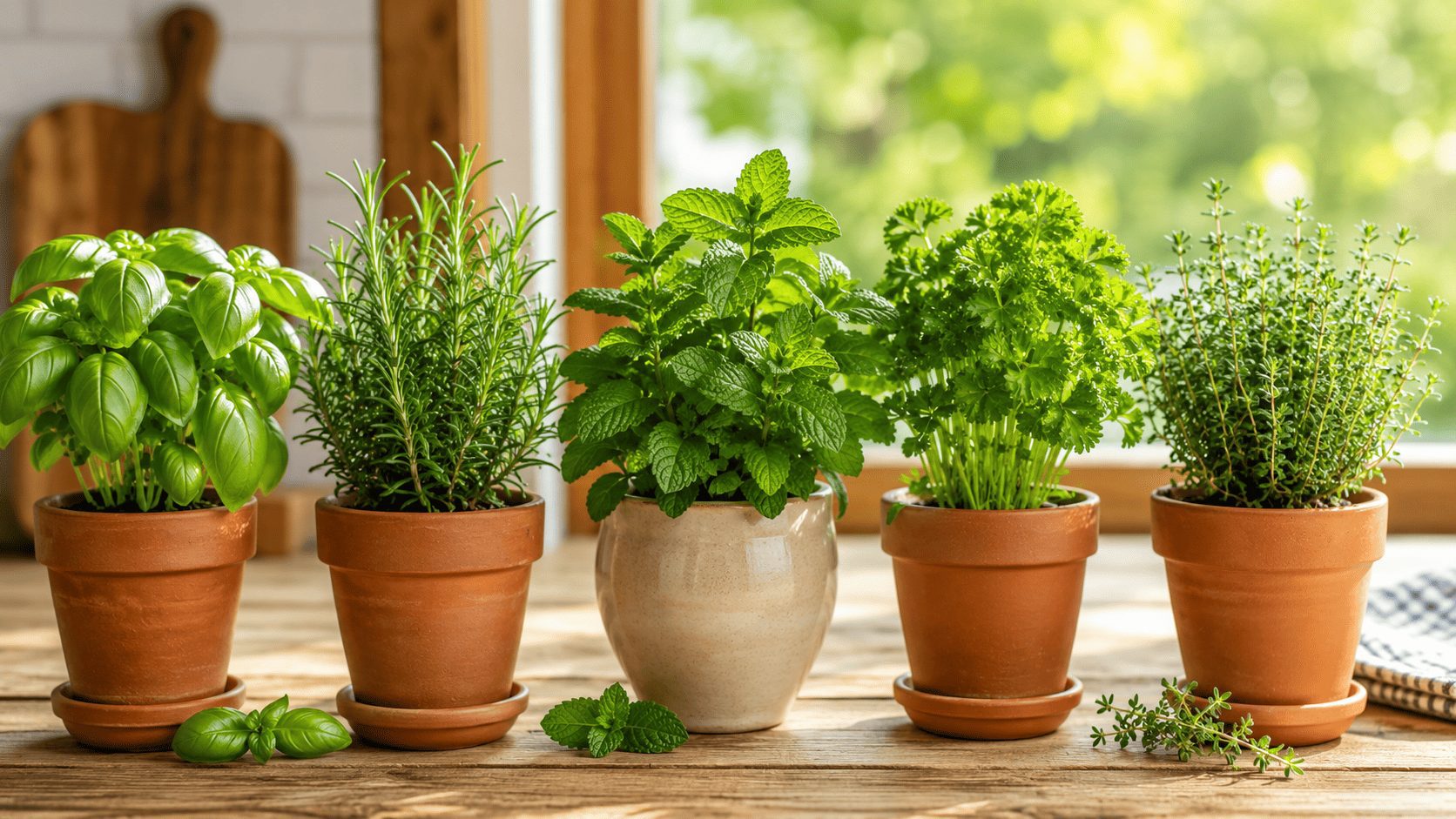
Growing herbs at home is one of the easiest ways to enjoy fresh, aromatic ingredients while saving money. Whether you have a spacious garden, a small balcony, or just a sunny kitchen window, many herbs thrive in pots and require very little maintenance. Fresh herbs not only enhance the flavor of your meals but also provide various health benefits.
In this guide, discover five easy herbs to grow at home and learn how to care for them successfully.
Table of Contents
Basil – The King of Kitchen Herbs
Basil is a popular herb known for its sweet aroma and vibrant green leaves. It is widely used in pasta, salads, pizza, pesto, and many other dishes.
How to Grow Basil
- Plant in well-draining soil.
- Place in a location with 6–8 hours of sunlight.
- Water regularly but avoid waterlogging.
- Pinch off flower buds to encourage leaf growth.
Benefits
- Rich in antioxidants.
- Supports digestion.
- Adds fresh flavor to homemade recipes.
Mint – Fast Growing and Refreshing
Mint is one of the easiest herbs to grow at home. It spreads quickly, so growing it in a container helps keep it under control.
Growing Tips
- Prefers partial sunlight.
- Keep the soil consistently moist.
- Harvest leaves frequently to encourage new growth.
Benefits
- Helps soothe digestive discomfort.
- Perfect for teas, lemonades, and desserts.
- Naturally freshens breath.
Coriander (Cilantro) – A Daily Kitchen Essential
Coriander is widely used in Indian, Mexican, and Asian cooking. Both the leaves and seeds are useful in the kitchen.
Growing Tips
- Sow seeds directly into the soil.
- Provide 4–6 hours of sunlight.
- Water lightly and regularly.
- Harvest leaves before the plant flowers.
Benefits
- Rich in vitamins A, C, and K.
- Enhances the flavor of curries, chutneys, and salads.
- Supports overall wellness.
Rosemary – Aromatic and Hardy
Rosemary is a fragrant herb with needle-like leaves. It is commonly used for seasoning roasted vegetables, meats, and bread.
Growing Tips
- Requires full sunlight.
- Use sandy, well-drained soil.
- Water only when the soil becomes dry.
Benefits
- Contains powerful antioxidants.
- Adds a rich aroma to recipes.
- Can be used fresh or dried.
Thyme – Small Plant, Big Flavor
Thyme is a low-maintenance herb that grows well in containers and small gardens. Its earthy flavor makes it ideal for soups, sauces, and roasted dishes.
Growing Tips
- Plant in well-drained soil.
- Ensure at least six hours of sunlight daily.
- Avoid overwatering.
Benefits
- Rich in vitamins and minerals.
- Supports immune health.
- Excellent for seasoning a wide variety of meals.
Tips for Growing Herbs Successfully
- Use pots with proper drainage holes.
- Place herbs where they receive enough sunlight.
- Harvest regularly to encourage healthy growth.
- Avoid excessive watering.
- Feed plants with organic compost every few weeks for better growth.
Why Grow Herbs at Home?
Growing herbs at home offers numerous advantages:
- Fresh herbs are always available.
- Saves money on grocery purchases.
- Adds greenery and beauty to your living space.
- Reduces dependence on packaged herbs.
- Encourages a healthier lifestyle through home gardening.
Starting a home herb garden doesn't require much space or gardening experience. Basil, mint, coriander, rosemary, and thyme are all beginner-friendly herbs that can thrive with basic care. By growing these five herbs at home, you'll enjoy fresher meals, a healthier lifestyle, and the satisfaction of harvesting your own ingredients.

References