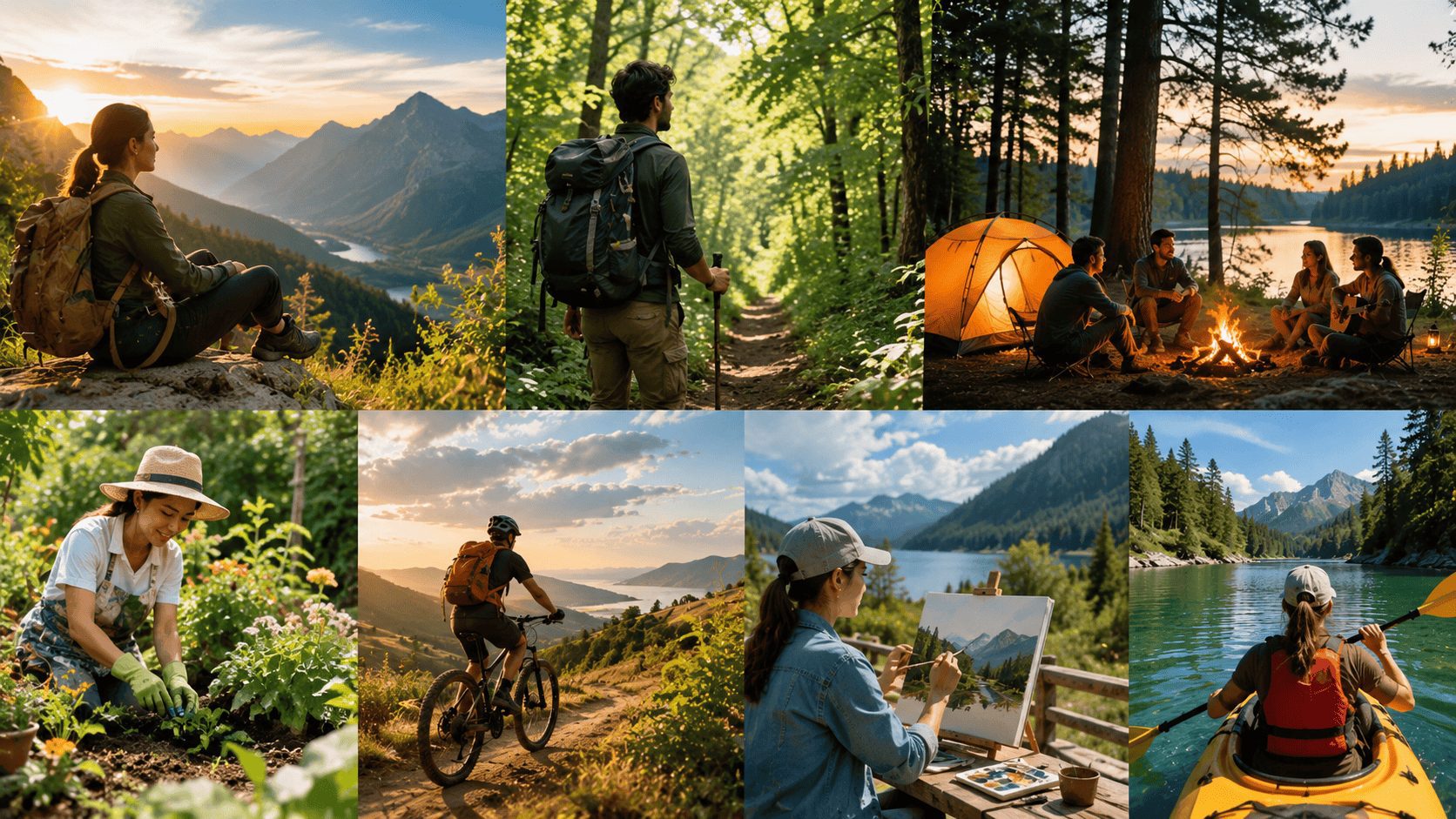
In today’s busy digital world, spending time outdoors can be a simple way to slow down, refresh the mind, and reconnect with nature. Outdoor hobbies and nature activities offer opportunities to stay active, reduce everyday stress, develop new skills, and enjoy quality time with family and friends.
Whether you enjoy hiking through forests, gardening at home, cycling along scenic routes, birdwatching, camping, or simply taking a peaceful walk in a park, there are countless ways to make nature a part of your lifestyle.
Table of Contents
What Are Outdoor Hobbies and Nature Activities?
Outdoor hobbies are activities that are enjoyed outside, usually in natural or open environments. They can range from relaxing activities such as gardening and photography to more physically demanding pursuits such as trekking, cycling, and kayaking.
Popular nature activities and outdoor hobbies include:
- Hiking and trekking
- Camping and backpacking
- Gardening and growing plants
- Cycling and mountain biking
- Birdwatching
- Fishing
- Nature photography
- Outdoor yoga and meditation
- Walking and jogging
- Kayaking and canoeing
- Rock climbing
- Wildlife observation
- Picnics and nature walks
The best activity depends on your interests, fitness level, location, and available time.
Benefits of Outdoor Hobbies
1. Improve Physical Fitness
Many outdoor activities naturally encourage movement. Walking, hiking, cycling, swimming, and recreational sports can help improve cardiovascular fitness, strength, flexibility, and endurance.
Unlike traditional indoor workouts, outdoor hobbies can make physical activity feel more enjoyable because you are exploring new surroundings while exercising.
2. Support Mental Well-Being
Spending time in natural surroundings can provide a welcome break from screens, work pressure, and daily routines. A quiet walk among trees, gardening, or sitting beside a lake can create an opportunity to relax and clear your mind.
Making regular time for nature activities for mental well-being can be a valuable part of a balanced lifestyle.
3. Reduce Screen Time
Phones, computers, and televisions have become an important part of modern life. While technology is useful, excessive screen time can leave people feeling disconnected from their surroundings.
Outdoor hobbies provide a natural reason to put your devices aside and focus on your environment. Even a short daily walk without your phone can help create a healthier relationship with technology.
4. Connect With Family and Friends
Outdoor activities can also strengthen relationships. Families can go camping, cycling, hiking, fishing, or enjoy a weekend picnic together.
These experiences create opportunities for conversation, teamwork, and shared memories away from everyday distractions.
Best Outdoor Hobbies for Beginners
You don't need expensive equipment or advanced skills to start enjoying nature. Several outdoor hobbies for beginners are affordable, accessible, and easy to learn.
Nature Walking
Walking is one of the easiest ways to begin spending more time outdoors. Explore a local park, trail, countryside path, or neighborhood green space.
Start with short walks and gradually increase your distance as your comfort and fitness improve.
Gardening
Gardening is an excellent outdoor hobby for people who prefer a slower and more relaxing activity. Growing flowers, herbs, vegetables, or native plants can provide a rewarding connection with nature.
Even if you have limited space, container gardening or balcony gardening can be a good starting point.
Birdwatching
Birdwatching combines relaxation, observation, and learning. All you need to begin is curiosity and a suitable outdoor location. A pair of binoculars and a bird-identification guide can make the experience even more interesting.
Nature Photography
You don't need professional photography equipment to enjoy nature photography. A smartphone can be enough to capture landscapes, flowers, insects, birds, and changing skies.
Photography can also encourage you to notice small details that you might otherwise overlook.
Cycling
Cycling is both a recreational hobby and an effective way to stay active. Beginners can start with short rides on safe roads or dedicated cycling paths before progressing to longer routes.
Outdoor Hobbies for Families
Outdoor activities are particularly valuable for families because they combine recreation with learning and physical activity.
Some family-friendly ideas include:
- Weekend nature walks
- Family camping trips
- Gardening projects
- Outdoor treasure hunts
- Cycling
- Birdwatching
- Picnics
- Fishing
- Nature photography
- Stargazing
Parents can also turn outdoor activities into educational experiences by teaching children about plants, animals, weather, conservation, and local ecosystems.
Nature Activities for a Healthy Lifestyle
A healthy lifestyle isn't only about exercise and nutrition. Rest, mental well-being, social connection, and time in nature can also contribute to overall wellness.
Try creating a simple outdoor routine. For example, you could take a 20-minute morning walk, spend time gardening on weekends, or plan one nature outing each month.
Consistency is often more important than choosing the most challenging activity.
How to Choose the Right Outdoor Hobby
With so many options available, choosing an activity can seem difficult. Consider these questions:
What do you enjoy?
If you like peaceful activities, gardening, photography, or birdwatching may suit you. If you prefer adventure, hiking, cycling, climbing, or camping could be more appealing.
How much time do you have?
Some hobbies require only 15–30 minutes, while others may involve full-day or weekend trips.
What is your fitness level?
Choose activities that match your current abilities and gradually increase the difficulty.
What is available near you?
Look for local parks, walking trails, gardens, lakes, forests, or community recreation areas.
What is your budget?
Many nature activities, including walking, hiking, gardening, and birdwatching, can be started with minimal equipment.
Tips for Spending More Time Outdoors
Making nature part of your lifestyle doesn't require a major change. Small habits can make a significant difference.
- Take a walk during your daily break.
- Visit a local park on weekends.
- Start a small home garden.
- Eat an occasional meal outdoors.
- Plan regular hikes or cycling trips.
- Explore new natural areas in your region.
- Try outdoor meditation or yoga.
- Organize nature-based activities with friends.
- Leave your phone behind occasionally when it is safe to do so.
- Learn about local plants, birds, and wildlife.
Enjoy Nature Responsibly
Enjoying the outdoors also comes with a responsibility to protect natural environments. Follow local regulations, avoid disturbing wildlife, stay on designated trails where required, and dispose of waste properly.
Simple practices such as carrying reusable water bottles, avoiding single-use plastic when possible, respecting wildlife, and leaving natural areas clean can help preserve outdoor spaces for future generations.
Outdoor hobbies and nature activities provide a practical way to bring more movement, relaxation, curiosity, and balance into everyday life. You don't need to become an experienced hiker or adventurer to benefit from nature.
Start small. Take a walk, plant something, watch the birds, photograph a sunset, or spend an afternoon exploring a nearby green space. Over time, these simple experiences can become meaningful habits that help you reconnect with the natural world.
The goal isn't to escape modern life completely. It is to create a healthier balance between technology, work, relationships, and the natural world around us.
References
- Wellbeing ideas to try in nature
- Four Simple Ways to Practice Self-Care Outdoors
- 8 Health Benefits of Getting Back to Nature and Spending Time Outside
- Best Outdoor Activities for a Healthy Lifestyle: Simple Ways to Enjoy Nature and Stay Active
- 8 outdoor activities that double as stress relievers: reconnect with nature, recharge your mind