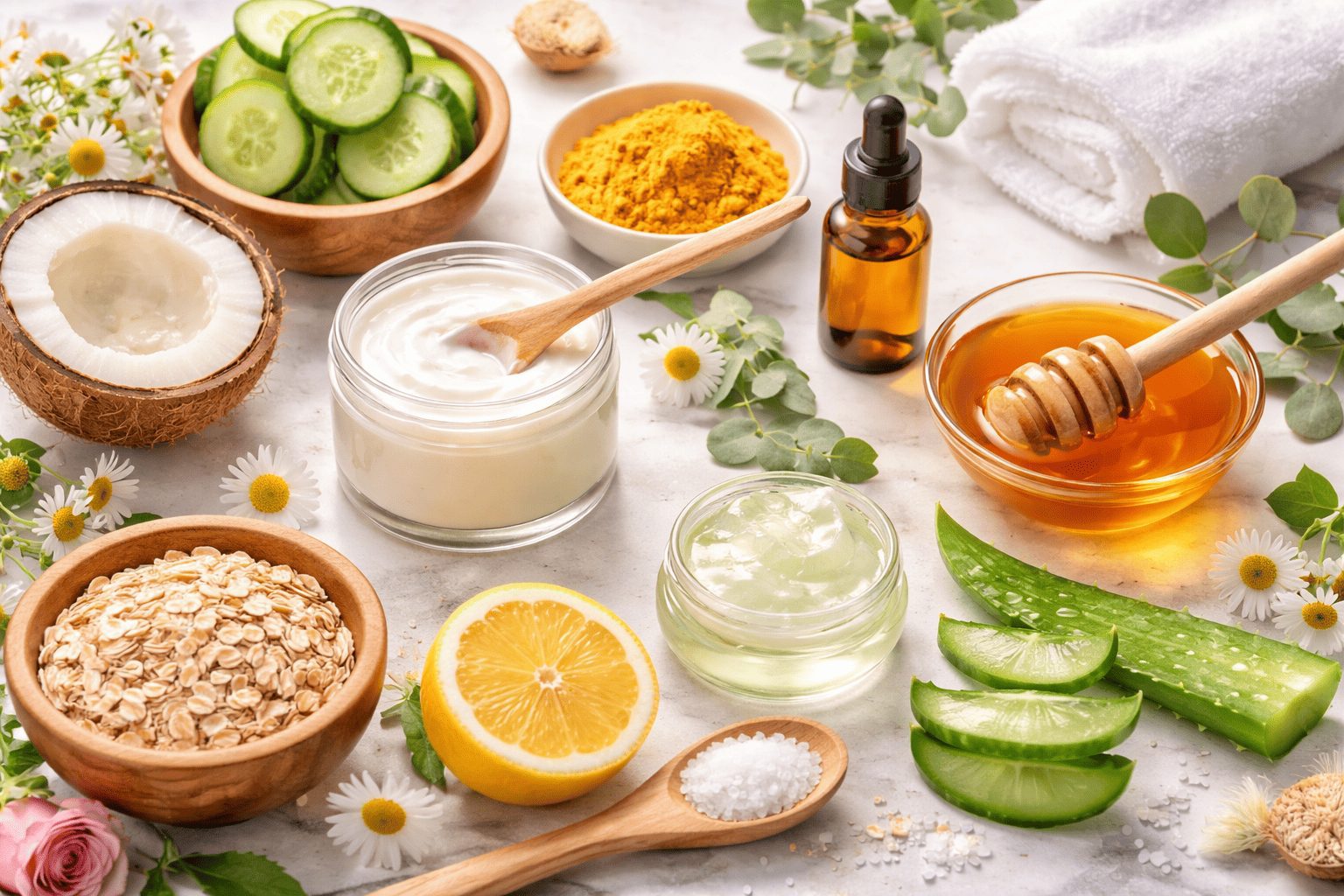
Skin problems such as acne, dryness, pigmentation, and irritation are common issues faced by many people. While commercial products are widely available, they often contain harsh chemicals that may worsen the condition over time.
Table of Contents
- Why Choose Natural Remedies for Skin Care
- Common Skin Problems and Their Causes
- Aloe Vera for Soothing Skin
- Honey for Moisturizing and Healing
- Turmeric for Brightening Skin
- Coconut Oil for Dry Skin
- Tea Tree Oil for Acne
- Cucumber for Cooling and Hydration
- Oatmeal for Sensitive Skin
- Tips for Using Natural Remedies Safely
- When to See a Doctor
Using natural home remedies for skin problems is a safer and more affordable way to care for your skin. These remedies use simple ingredients that nourish, protect, and heal your skin naturally.
Why Choose Natural Remedies for Skin Care
Natural remedies are gentle on the skin and usually free from harmful chemicals. They work by supporting the skin’s natural healing process rather than masking the problem.
Benefits include:
Fewer side effects
Cost-effective solutions
Suitable for most skin types
Easily available ingredients
Common Skin Problems and Their Causes
Understanding the root cause of skin problems helps in choosing the right remedy.
Common issues include:
Acne caused by excess oil and bacteria
Dry skin due to lack of moisture
Pigmentation from sun exposure
Irritation from chemicals or allergies
Identifying the cause allows you to treat the problem effectively.
Aloe Vera for Soothing Skin
Aloe vera is widely known for its calming and healing properties. It helps reduce inflammation and hydrates the skin.
How to use:
Apply fresh aloe vera gel directly to the skin
Leave it for 15–20 minutes
Rinse with lukewarm water
It is especially useful for sunburn, irritation, and dry skin.
Honey for Moisturizing and Healing
Honey is a natural moisturizer with antibacterial properties. It helps keep the skin soft and reduces acne-causing bacteria.
How to use:
Apply a thin layer of raw honey on the face
Leave for 15 minutes
Rinse gently
Regular use can improve skin texture and hydration.
Turmeric for Brightening Skin
Turmeric has anti-inflammatory and antioxidant properties. It helps reduce pigmentation and improves skin tone.
How to use:
Mix turmeric with yogurt or milk
Apply as a face mask
Leave for 10–15 minutes
Use it in moderation to avoid staining the skin.
Coconut Oil for Dry Skin
Coconut oil is an excellent natural moisturizer. It helps lock in moisture and repair dry, flaky skin.
How to use:
Apply a small amount before bedtime
Massage gently into the skin
It works best for dry skin but should be avoided on oily or acne-prone skin.
Tea Tree Oil for Acne
Tea tree oil has antibacterial properties that help fight acne-causing bacteria.
How to use:
Dilute with a carrier oil
Apply directly to affected areas
It helps reduce redness and prevent breakouts.
Cucumber for Cooling and Hydration
Cucumber helps soothe irritated skin and reduce puffiness.
How to use:
Place cucumber slices on the skin
Or apply cucumber juice
It refreshes and hydrates the skin naturally.
Oatmeal for Sensitive Skin
Oatmeal is gentle and helps calm irritated or itchy skin.
How to use:
Mix oatmeal with water or milk
Apply as a paste
Rinse after 15 minutes
It is ideal for sensitive or inflamed skin.
Tips for Using Natural Remedies Safely
While natural remedies are generally safe, proper use is important.
Always do a patch test
Use fresh ingredients
Avoid overuse
Be consistent for best results
When to See a Doctor
Natural remedies work well for mild to moderate skin issues. However, severe conditions may require medical attention.
Consult a dermatologist if:
Skin problems persist
There is severe irritation or infection
Home remedies do not show improvement
Using natural home remedies for skin problems is an effective way to maintain healthy and glowing skin. Ingredients like aloe vera, honey, turmeric, and cucumber provide nourishment without harmful chemicals.
Consistency and proper care are key to achieving the best results. By choosing natural solutions, you can support your skin’s health in a safe and sustainable way.

References