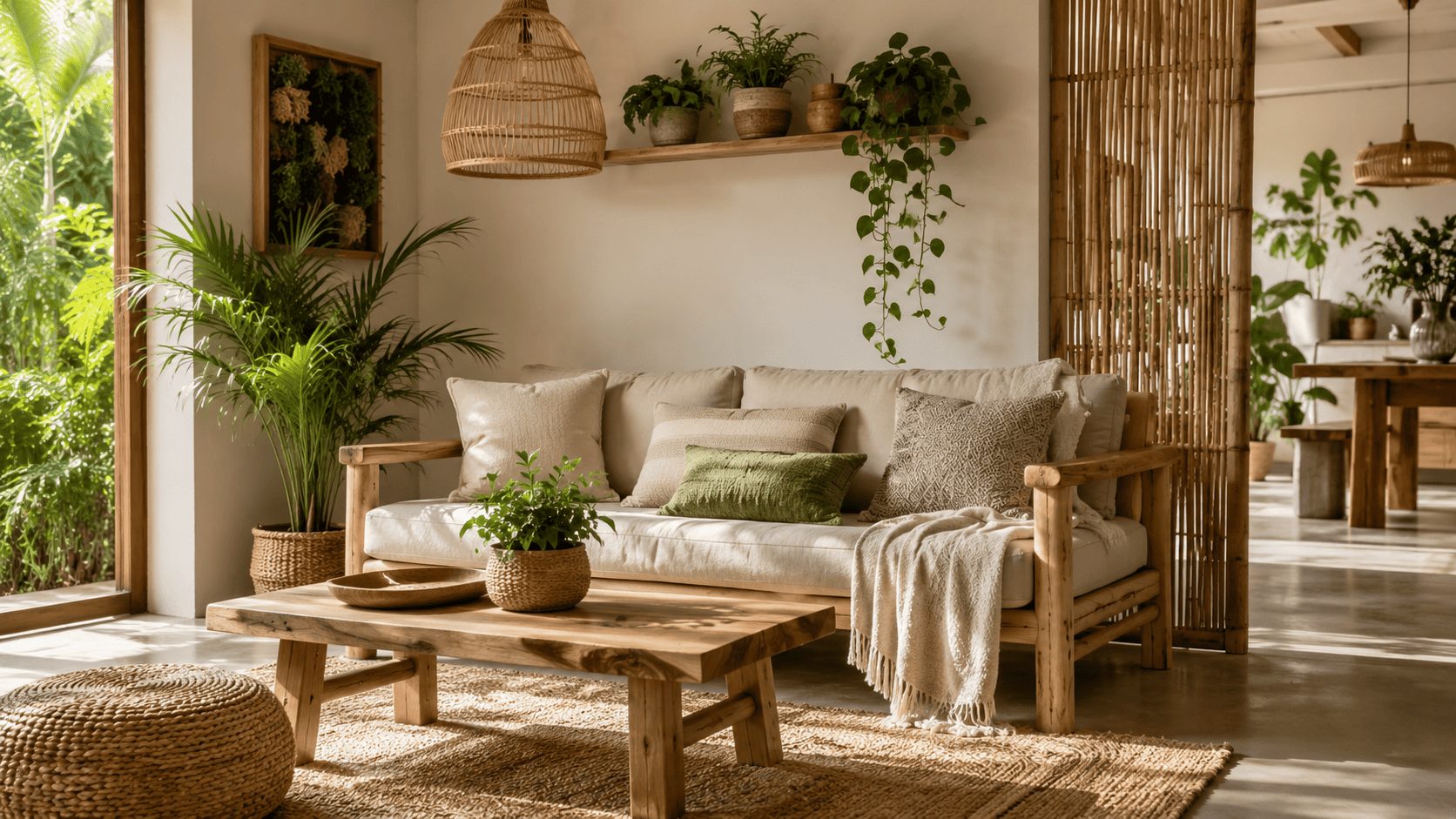
A home should be more than just a beautiful space. It should feel comfortable, healthy, and connected to the natural world. This is where natural home and sustainable interiors are becoming increasingly popular.
Sustainable interior design focuses on making thoughtful choices about materials, furniture, lighting, energy use, and décor. At the same time, natural interior design brings organic textures, earthy colors, plants, wood, stone, and other natural elements into the home. Together, these approaches create interiors that are elegant, timeless, and environmentally responsible.
Table of Contents
- What Are Natural and Sustainable Interiors?
- Why Choose Sustainable Interior Design?
- Best Natural Materials for Sustainable Interiors
- How to Create a Natural and Sustainable Home
- Sustainable Interior Design for Different Rooms
- The Role of Minimalism in Sustainable Interiors
- Natural Home Design Is About Mindful Choices
- Frequently Asked Questions
What Are Natural and Sustainable Interiors?
Natural interiors emphasize materials, colors, and textures inspired by nature. Think warm wood, natural stone, bamboo, linen, cotton, rattan, clay, jute, and indoor plants.
Sustainable interiors go one step further by considering the environmental impact of the products and materials used in a home. This can include choosing responsibly sourced materials, durable furniture, recycled products, locally made pieces, and energy-efficient solutions.
The goal is not to create a perfect “green” home overnight. Instead, sustainable design encourages homeowners to make better choices wherever possible.
Why Choose Sustainable Interior Design?
1. A Healthier Living Environment
Many natural materials can help create a more pleasant indoor environment. Natural fabrics, finishes, and materials can give interiors a softer and more comfortable character.
Choosing low-emission paints and finishes can also be an important part of creating a healthier home.
2. Reduced Environmental Impact
Furniture and décor can have a significant environmental footprint. Selecting durable products, recycled materials, responsibly sourced wood, and locally produced items can help reduce waste and unnecessary resource consumption.
3. Timeless Beauty
Sustainable interiors are not about following short-lived trends. Natural materials often become more beautiful with age.
Wood develops character, stone offers unique patterns, and handmade textiles bring individuality to a room. This creates interiors that can remain attractive for many years.
4. Less Waste
Instead of replacing furniture whenever styles change, sustainable design encourages repairing, reusing, upcycling, and choosing versatile pieces.
A well-designed piece of furniture can serve a home for decades rather than being discarded after a few years.
Best Natural Materials for Sustainable Interiors
Wood
Wood is one of the most popular materials for natural interior design. It can be used for flooring, furniture, wall panels, doors, shelving, and decorative details.
For a more sustainable approach, consider responsibly sourced or reclaimed wood and choose durable finishes.
Bamboo
Bamboo grows quickly and can be used for furniture, flooring, screens, baskets, and decorative accessories. Its natural appearance works particularly well with minimalist and contemporary interiors.
Rattan and Cane
Rattan and cane bring warmth and texture into interiors. They work beautifully for chairs, cabinets, headboards, pendant lights, and decorative elements.
Natural Fabrics
Linen, organic cotton, hemp, and wool can add softness and texture without relying entirely on synthetic materials.
Use natural fabrics for curtains, cushions, rugs, bedding, and upholstery to create a relaxed atmosphere.
Stone and Clay
Natural stone, terracotta, and clay can introduce earthy character into kitchens, bathrooms, living areas, and outdoor spaces.
Their natural variations ensure that every surface has a unique appearance.
Jute
Jute is particularly useful for rugs, baskets, mats, and decorative accessories. Its earthy texture complements wood, plants, neutral colors, and other natural materials.
How to Create a Natural and Sustainable Home
You don't need to completely renovate your home to embrace sustainable interiors. Small changes can make a significant difference.
Choose Quality Over Quantity
Instead of filling a room with inexpensive décor, invest in fewer pieces that are well made and built to last.
A solid wooden table, handcrafted chair, or timeless sofa can become a long-term part of your home.
Use an Earthy Color Palette
Natural interiors often work well with colors inspired by the outdoors.
Consider:
- Warm beige
- Sand
- Cream
- Terracotta
- Olive green
- Soft brown
- Muted grey
- Warm white
These colors create a calm foundation and allow natural textures to become the focus.
Bring Nature Indoors
Indoor plants are an easy way to introduce natural beauty into your home. Large leafy plants can become focal points, while smaller plants can be placed on shelves, tables, and window ledges.
Natural light is equally important. Whenever possible, keep windows unobstructed and use light-colored curtains to maximize daylight.
Select Sustainable Furniture
Before buying new furniture, consider its material, construction, lifespan, and origin.
Look for furniture made from responsibly sourced wood, recycled materials, or durable natural materials. Vintage and second-hand furniture can also be excellent sustainable choices.
Reuse and Upcycle
An old cabinet doesn't necessarily need to be thrown away. Repainting, refinishing, reupholstering, or modifying existing furniture can give it a completely new life.
Upcycling also adds personality because the finished piece is often more distinctive than mass-produced décor.
Sustainable Interior Design for Different Rooms
Living Room
Create a welcoming living room with a natural-fiber rug, wooden furniture, linen cushions, indoor plants, and warm lighting.
Avoid overcrowding the space. A few carefully selected pieces can create a more sophisticated look.
Bedroom
A sustainable bedroom should feel calm and comfortable. Choose natural bedding, breathable fabrics, wooden furniture, soft lighting, and soothing earthy colors.
Keep décor simple to create a peaceful atmosphere.
Kitchen
Choose durable cabinetry, long-lasting countertops, reusable storage solutions, and energy-efficient appliances.
Wooden cutting boards, ceramic containers, glass jars, and natural-fiber textiles can add warmth while reducing dependence on disposable products.
Bathroom
Natural stone, terracotta, wood accents, and neutral colors can transform a bathroom into a spa-like retreat.
Choose durable fixtures and water-efficient solutions where possible.
The Role of Minimalism in Sustainable Interiors
Minimalism and sustainability naturally complement each other.
A minimalist home doesn't mean an empty home. It means being intentional about what you bring into your space.
Ask yourself:
Do I need it? Will I use it for a long time? Is it well made? Can it be repaired or reused?
These simple questions can help reduce unnecessary purchases and create a more meaningful interior.
Natural Home Design Is About Mindful Choices
The most sustainable home isn't necessarily the one filled with expensive eco-friendly products. It is often the home where materials are chosen carefully, furniture is used for longer, waste is minimized, and every purchase has a purpose.
Natural home and sustainable interiors combine beauty with responsibility. By using natural materials, embracing timeless design, reducing waste, and connecting indoor spaces with nature, homeowners can create environments that feel both contemporary and enduring.
Natural home and sustainable interiors offer a practical way to create spaces that are beautiful, comfortable, and environmentally conscious.
From responsibly sourced wood and natural fabrics to indoor plants, earthy colors, vintage furniture, and thoughtful layouts, sustainability can be incorporated into almost every part of a home.
The key is to start small, choose consciously, and focus on quality rather than quantity. A sustainable home doesn't have to sacrifice style—in fact, thoughtful design can make a home feel more personal, timeless, and connected to nature.
Frequently Asked Questions
What are natural interiors?
Natural interiors use materials, colors, textures, and decorative elements inspired by nature, including wood, stone, bamboo, linen, cotton, rattan, clay, and plants.
What is sustainable interior design?
Sustainable interior design aims to reduce environmental impact through responsible material selection, durable furniture, waste reduction, energy efficiency, reuse, and mindful purchasing.
How can I make my home more sustainable?
Start by choosing durable furniture, using natural or responsibly sourced materials, reusing existing pieces, reducing unnecessary purchases, improving natural lighting, and selecting energy- and water-efficient products.
Is sustainable interior design expensive?
Not necessarily. Buying second-hand furniture, repairing existing pieces, choosing fewer high-quality products, and using natural elements such as plants can all support sustainable design without a major budget.
Can sustainable interiors still look luxurious?
Yes. Natural stone, quality wood, handcrafted furniture, linen, wool, and carefully selected lighting can create an elegant and luxurious interior while supporting a more sustainable design philosophy.

References
- 10 Eco-Friendly Home Interior Design Ideas For 2026
- Eco-Friendly Interior Design: Creating Green Interiors
- Sustainable Interior Design: 23 Ideas for a Healthier Home and Planet
- 10 Eco-Friendly Design Ideas That Make Homes Healthier and More Energy Efficient
- Sustainable Interior Design: The Complete Guide to Eco-Friendly, Ethical Home Design