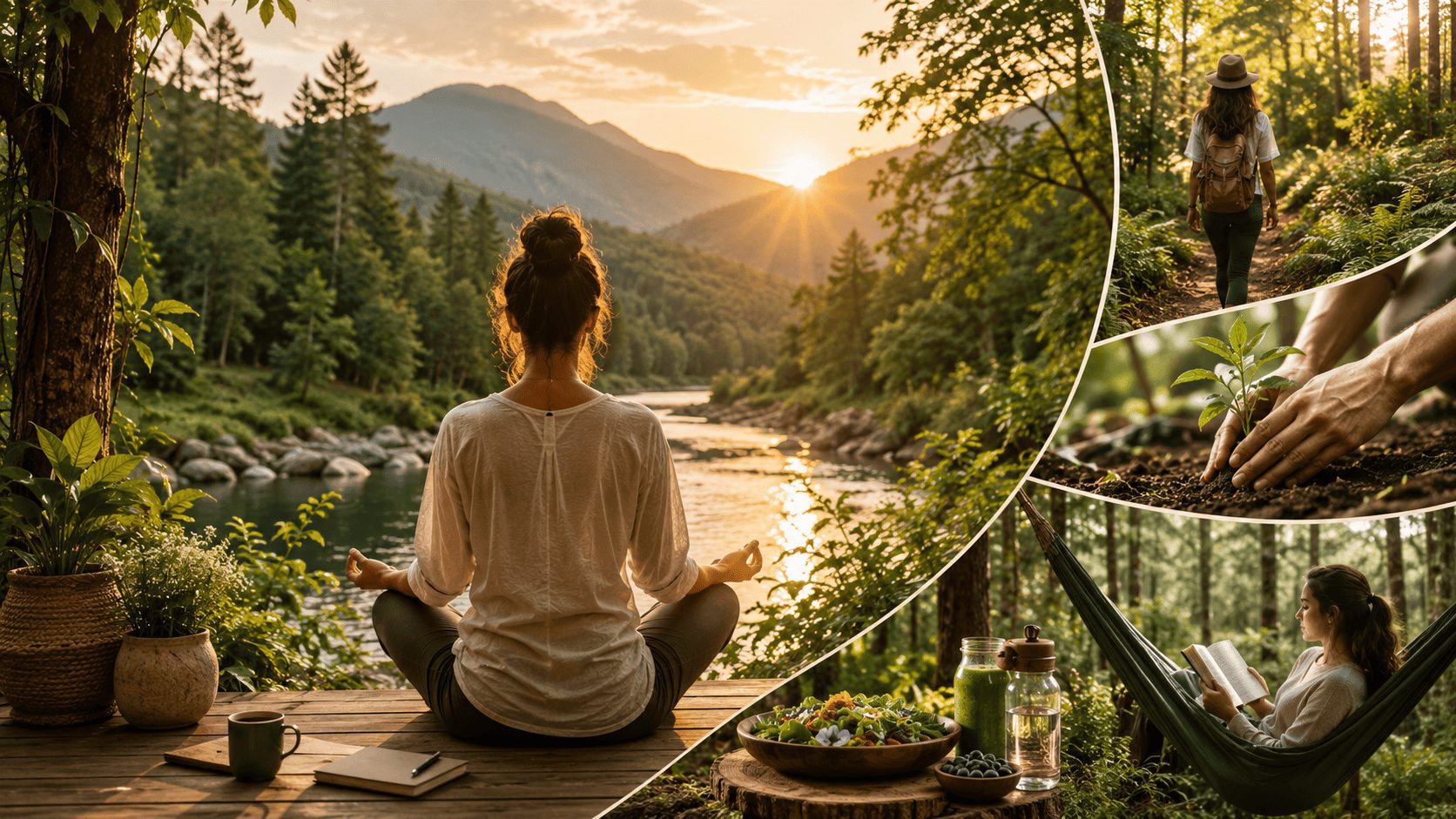
Nature wellness is the practice of using natural environments and everyday contact with nature to support physical, mental, emotional, and social wellbeing.
In 2026, this idea is becoming more relevant as people look for simpler alternatives to highly optimized and technology-heavy wellness routines. Current wellness reporting points toward slower, more practical habits, greater connection with nature, and environments designed around human wellbeing.
Nature wellness does not necessarily require an expensive retreat or a long trip. It can be as simple as walking through a local park, spending time in a garden, watching the sunrise, exercising outdoors, or creating a nature-inspired space at home.
Table of Contents
Why Nature Wellness Matters in 2026
Modern lifestyles often involve long hours indoors, constant notifications, artificial lighting, and limited opportunities to slow down. As a result, many people are searching for wellness practices that feel natural and sustainable.
The 2026 wellness landscape is increasingly moving away from extreme optimization toward meaningful experiences, emotional wellbeing, rest, and human connection.
Nature fits naturally into this shift because it encourages people to slow their pace and pay attention to their surroundings.
Top Nature Wellness Trends for 2026
1. Forest Bathing and Shinrin-Yoku
Forest bathing, also known as Shinrin-Yoku, involves spending mindful, unhurried time in a forest or wooded environment.
Unlike conventional hiking, the objective is not distance or speed. Instead, people focus on sights, sounds, smells, textures, and the overall atmosphere of the environment.
In 2026, nature-based wellness is increasingly emphasizing structured sensory experiences rather than simply treating nature as a backdrop for exercise.
2. Micro Nature Breaks
You do not need an entire weekend in the mountains to reconnect with nature.
Short periods outdoors can become part of an ordinary day:
- Take a 10-minute walk between work sessions.
- Sit under a tree and leave your phone in your pocket.
- Drink your morning tea beside a window or balcony garden.
- Watch the sky for a few minutes before bed.
- Walk through a nearby green space instead of staying indoors.
This approach makes nature wellness more accessible because it focuses on consistency rather than occasional luxury experiences.
3. Biophilic Design at Home
Biophilic design brings elements of nature into indoor environments through plants, natural materials, daylight, water, organic shapes, and views of greenery.
Wellness architecture discussions in 2026 are placing greater emphasis on environments that work with human biology, including natural daylight, biophilic elements, healthier materials, and circadian-friendly lighting.
Simple ideas include adding indoor plants, using natural textures, opening windows when practical, creating a balcony garden, and positioning a reading or relaxation area near natural light.
4. Outdoor Wellness Activities
Outdoor movement is another important part of nature wellness.
Walking, cycling, gardening, yoga, stretching, swimming, and hiking can combine physical activity with exposure to natural surroundings.
The goal does not have to be intense exercise. A relaxed walk through a green space can become a wellness ritual in itself.
5. Nature-Based Wellness Travel
Wellness travel in 2026 is showing a stronger interest in elemental and nature-focused experiences. Travelers are increasingly looking beyond conventional spa environments toward forests, cabins, natural hot springs, outdoor experiences, and quieter destinations.
Wellness tourism trends also highlight shorter, nearby nature escapes as an appealing option for people seeking restoration without complicated long-distance travel.
This means a meaningful wellness trip does not have to involve an international destination. A nearby countryside, forest, lake, mountain area, or coastal location may provide the same opportunity to disconnect from everyday routines.
Benefits of Nature Wellness
Spending time in nature can support several aspects of wellbeing. Commonly discussed benefits include:
- Stress management: Quiet natural environments can provide a break from everyday stimulation.
- Mental restoration: Green spaces can offer opportunities to step away from screens and demanding tasks.
- Physical activity: Parks, trails, gardens, and outdoor spaces encourage movement.
- Mindfulness: Nature provides countless opportunities to focus attention on sounds, sights, smells, and sensations.
- Better connection: Outdoor activities can create opportunities for meaningful time with family and friends.
- Environmental awareness: Spending time outdoors can strengthen appreciation for local ecosystems.
Nature should complement—not replace—professional medical or mental-health care when that care is needed.
How to Create a Nature Wellness Routine in 2026
A sustainable routine can be surprisingly simple.
Morning
Start the day with natural daylight whenever possible. Step outside, walk around your garden or balcony, or simply spend a few minutes looking outdoors before beginning your digital routine.
Afternoon
Use a short outdoor break to interrupt long periods of sitting or screen use. Even a brief walk can create a useful transition between work and personal time.
Evening
Reduce stimulation and spend a few quiet minutes outdoors or near an open window. If outdoor time is not practical, bring plants and natural materials into your relaxation space.
Weekend
Reserve some time for a longer nature experience. Visit a park, botanical garden, forest, lake, countryside area, or other natural setting.
The key is not perfection. Regular contact with nature is more realistic than waiting for the perfect wellness retreat.
Nature Wellness and Technology
Nature wellness does not mean completely rejecting technology.
Technology can help people discover trails, track outdoor activities, find parks, plan trips, or learn about local ecosystems. However, the 2026 wellness movement is also responding to excessive digital stimulation.
Some wellness trends are therefore emphasizing technology-free experiences and environments that naturally encourage people to slow down.
A useful rule is simple: use technology to reach nature, then give yourself permission to put it away.
The Future of Nature Wellness
Nature wellness is likely to become increasingly integrated into homes, workplaces, hospitality, travel, and community spaces.
The trend is already visible in wellness architecture, where daylight, biophilic design, healthier materials, natural elements, and human-centered environments are becoming important parts of the conversation.
At the same time, wellness tourism is moving toward nature immersion and shorter restorative escapes, while broader wellness trends are placing greater value on human experiences rather than constant measurement and optimization.
Nature wellness 2026 is about getting back to simple things that support everyday wellbeing: fresh air, daylight, movement, greenery, quiet, and meaningful time outdoors.
You do not need a luxury retreat, expensive equipment, or a complicated wellness program to get started. A daily walk, a few minutes in a garden, an outdoor workout, or a screen-free moment under the sky can become part of a healthier lifestyle.
As wellness continues to evolve in 2026, the most valuable trend may be the simplest one: spending more intentional time with the natural world.

References
- Freedom Is Being Present
- 5 ways to help our wellbeing with nature
- How to connect with nature for physical and mental wellbeing
- Reconnecting with Nature: The Science of Why It Feels So Good
- Make Forest Bathing Your Wellbeing Habit for 2026: How to Get Started
- Ready to recharge? These are the best wellness experiences in the world for 2026.